Solar for Landed Homes, Condos and HDB Flats: Who Can Actually Install in Singapore?
Can you install solar on a condo or HDB flat in Singapore? Landed homeowners can. Condos need an MCST vote. HDB residents cannot. Here is the honest breakdown.
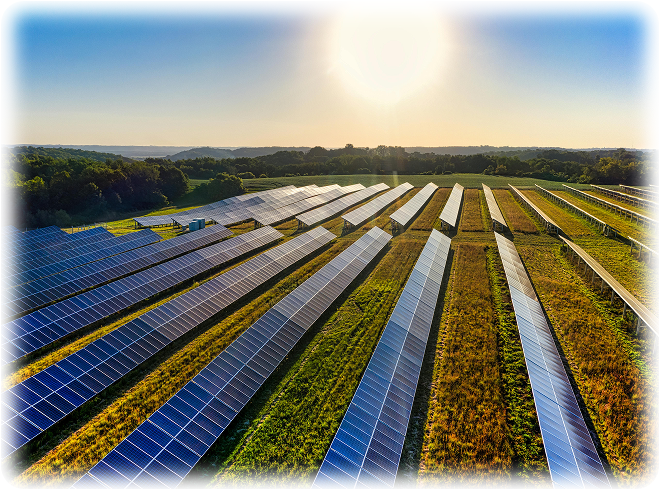
The quick answer: It comes down to one question, who owns the roof. If you live in a landed home (terrace, semi-detached, bungalow or Good Class Bungalow) you own your roof outright and can install solar directly, with your installer handling the SP Group submission. If you live in a condominium or apartment, the roof is common property belonging to the MCST, so an individual unit owner cannot install for their own use, but the MCST can install a building-wide system by resolution at a general meeting, with the savings going to common-area electricity. If you live in an HDB flat, you cannot install panels on the block roof at all; those rooftops are covered by the national SolarNova programme, and the electricity generated offsets the block’s common services, which reduces what residents pay through service and conservancy charges. Landed homes are the only category where a household directly owns and keeps the savings.
Why roof ownership decides everything
Most eligibility confusion about solar in Singapore disappears once you separate two things: whether solar is technically possible on a building, and whether you personally have the right to put it there.
Technically, almost every Singapore rooftop can host panels. The equator gives us strong, year-round sun, and tile, metal and reinforced-concrete roofs all have proven mounting methods. The real question is legal, not technical. Solar panels are a permanent fixture on a roof, and in Singapore the roof of a landed home, a condominium block and an HDB block are owned by three completely different parties. That single fact drives who can decide, who pays, and who keeps the savings.
Landed homes: you own the roof, so you decide
If you own a terrace house, semi-detached, bungalow or Good Class Bungalow on a private land title, the roof is yours. You can commission a solar system without needing anyone else’s permission as a property owner, and you keep 100% of the savings.
The process is straightforward and mostly handled for you. Your installer’s Licensed Electrical Worker (LEW) makes the electrical submission to SP Group and registers the system under the Simplified Credit Treatment (SCT) scheme, which is what credits you for any solar you export to the grid. For a home-sized system there is no EMA licence for you to apply for; systems below 1 MWac do not require a generation licence, and the notification side sits with your installer. URA, BCA or SCDF only enter the picture in specific cases, such as a conservation property, an unusual structural load, or a battery above the relevant threshold. The full picture is in our solar approvals guide.
Savings are direct. Every kilowatt-hour your panels produce that you use in the house is a kilowatt-hour you do not buy from the grid at the prevailing tariff, and anything you export is credited under SCT. How quickly that adds up to a payback depends on your property type rather than one site-wide figure, and our residential solar page sets out the ranges we see for terrace, semi-detached, bungalow and Good Class Bungalow homes. The details are in our complete guide to solar for Singapore landed homes and the cost guide.
One wrinkle worth knowing: strata landed housing, meaning cluster houses and landed homes inside a gated development with an MCST. These look like landed homes but are legally strata. Whether the roof is part of your strata lot or is common property depends on the strata title plan and the development’s by-laws. If you live in one, check the strata title plan and the MCST by-laws before assuming you can proceed, because in some developments you will need MCST consent even though the house is yours. This is worth confirming early rather than after a design has been done.
Condominiums and apartments: the MCST owns the roof
If you live in a condominium or apartment block, the rooftop is common property under the Building Maintenance and Strata Management Act (BMSMA). It belongs to all subsidiary proprietors collectively and is managed by the Management Corporation Strata Title (MCST). An individual unit owner cannot install panels up there for their own unit, and there is no practical way to wire a rooftop array down to one apartment’s meter.
That does not mean condos are shut out of solar. It means the decision sits with the MCST rather than with you. A building-wide system is entirely possible, and a growing number of Singapore developments are doing it.
How the approval works. Installing solar is a change to common property, so it must be approved by a resolution at a general meeting, either the AGM or an EGM convened for the purpose. The threshold depends on the structure of the deal:
- If the MCST buys and owns the system as an improvement to common property, this is generally approved by ordinary resolution at a general meeting, a simple majority of those present and voting.
- If the arrangement gives a third party exclusive use of part of the common property, which is typically the case under a long-term power purchase agreement or lease where the solar company owns the panels on the roof, a higher threshold applies. A 90% resolution may be required. This is a legal question specific to the arrangement, and the MCST’s own legal adviser should confirm which threshold applies before anything is put to a vote.
Where the savings go. A condo rooftop system offsets common-area electricity: lifts, corridor and staircase lighting, water pumps, car park lighting, and the pool and gym equipment. That reduces the development’s electricity bill, which is one of the larger line items in most MCST budgets. Residents benefit indirectly through lower maintenance fees, or through the fee increase that does not have to happen. Your own unit’s electricity bill is unaffected, because your meter is separate.
How long it takes. Considerably longer than a landed home. The technical work is the easy part. Building consensus, obtaining quotes, tabling the resolution at a general meeting, and then executing usually runs to something like 9 to 12 months from first proposal to a working system. If you are the resident pushing for it, expect to spend most of that time on the committee process rather than on engineering.
Registration. Depending on the system size and whether the MCST buys electricity as a contestable consumer, the system registers under either SCT (below 1 MWac, non-contestable) or ECIS, the Enhanced Central Intermediary Scheme, which applies to contestable consumers with systems below 10 MWac and credits exports at the half-hourly USEP rate rather than a fixed tariff. Most condo installations are sized to cover common-area load rather than to export heavily, so this matters less than it sounds, but your installer should set the expectation clearly.
If you want to push for it in your building, the practical first steps are to raise it informally with your managing agent or council members, ask for a feasibility assessment and indicative costing so there is a real number to discuss, and get it onto a general meeting agenda properly rather than raising it from the floor.
HDB flats: the rooftop is already spoken for
If you live in an HDB flat, you cannot install solar panels on the block’s roof. HDB blocks are public housing on leasehold, the rooftop is not part of your flat, and it is managed by HDB and the Town Council rather than by residents. Beyond ownership, those roofs are already occupied by water tanks, lift motor rooms and mechanical and electrical plant, and they were not designed for privately added loads or the maintenance access that private systems would need.
What exists instead is SolarNova, the national programme under which HDB and other public-sector rooftops are fitted with solar through government tender, with SP Group and BCA-registered contractors delivering the installations. The electricity generated powers the block’s common services: lifts, corridor and staircase lighting, water pumps and car park lighting. Because that reduces the block’s common-services electricity bill, the benefit reaches residents through the service and conservancy charges rather than through your own utility bill.
So the honest answer for an HDB resident is that your block may well already have solar on it, or be in line to get it, and you benefit from it collectively. What you cannot do is install a system of your own and see it on your SP bill. There is no residential HDB equivalent of the landed-home arrangement.
Two edge cases worth naming. A small number of HDB terrace houses exist in a few older estates; these are still HDB leasehold property, so any rooftop works would need HDB’s approval as the landlord, and you should check directly with HDB rather than assume the landed-home path applies. And balcony or window-mounted panels, the plug-in kits sold in some other countries, are not a workable route here: they need HDB’s approval for any external fixture, raise real safety questions about anything mounted on a high-rise facade, and cannot be connected to the grid without going through the same LEW and SP Group process as any other system.
The three side by side
Who owns the roof. On a landed home, you do. In a condominium, the MCST does, as common property. On an HDB block, HDB does, managed with the Town Council.
Can an individual install? Yes on a landed home. No in a condominium, where only the MCST can. No on an HDB block.
Who decides. You, on a landed home. A general meeting resolution in a condominium, with the threshold depending on the deal structure. The national SolarNova programme for HDB blocks.
Who keeps the savings. You do, directly on your SP bill, on a landed home. The development does in a condominium, through lower common-area electricity. HDB residents benefit collectively, through service and conservancy charges.
Typical timeline. On a landed home, typically 4 to 8 weeks from signed contract to switch-on, which is SP Group-dependent. In a condominium, around 9 to 12 months including the committee and voting process. Not applicable for HDB, which is programme-driven.
Export crediting. SCT on a landed home. SCT or ECIS in a condominium, depending on size and contestability. Not applicable for HDB residents.
What if you live in a condo or HDB flat and want solar anyway?
We would rather be straight with you than sell you something that does not exist. If you are a condo or HDB resident, there is no product that puts solar on your own roof and your own bill. What you can realistically do:
- In a condo, put it to the MCST. A feasibility study and an indicative cost are what turn a good idea into an agenda item, and a building-wide system genuinely does reduce what every unit pays in maintenance fees.
- In an HDB flat, the block-level benefit through SolarNova is the mechanism, and there is nothing further for an individual resident to arrange.
- If you own or run a business with its own roof, warehouse, factory, school or commercial building, the commercial route is open and works much like the landed-home case, with ECIS in place of SCT for a contestable consumer.
- If you are moving to a landed home, it is worth checking the roof at viewing stage. Our roof self-assessment takes about five minutes and tells you what to look for, and our guide on how many panels a landed home needs turns that into a system size.
Frequently asked questions
Can I install solar panels on my condo in Singapore?
Not as an individual unit owner. A condominium rooftop is common property owned collectively and managed by the MCST, so only the MCST can install a system, approved by a resolution at a general meeting. The electricity offsets common-area load such as lifts, lighting and pumps, which reduces maintenance costs for all units.
Can HDB flat owners install solar panels in Singapore?
No. HDB block rooftops are not part of any individual flat and are managed by HDB and the Town Council. Solar on HDB blocks is installed through the national SolarNova programme, and the electricity powers common services such as lifts, corridor lighting and water pumps, which reduces residents’ service and conservancy charges.
Who can install solar panels on their own home in Singapore?
Owners of landed homes on a private land title, including terrace houses, semi-detached houses, bungalows and Good Class Bungalows. They own the roof, keep the savings directly, and their installer’s Licensed Electrical Worker handles the SP Group submission and SCT registration.
What approval does an MCST need to install solar on a condo roof?
A resolution at a general meeting. Where the MCST buys and owns the system as an improvement to common property, an ordinary resolution generally applies. Where a third party is granted exclusive use of common property, for example under a long-term lease or power purchase agreement, a higher threshold such as a 90% resolution may be required. The MCST’s legal adviser should confirm which applies.
Do I benefit from solar if I live in an HDB flat?
Yes, indirectly. If your block is fitted under SolarNova, the solar electricity offsets the block’s common services, which lowers the common-services electricity bill and feeds through to the service and conservancy charges residents pay. There is no effect on your own household electricity bill.
Not sure which category your home falls into?
If you own a landed home, or a strata landed house and are unsure whether the roof is yours, we are happy to look at it with you and tell you plainly what is possible. And if you are on an MCST council weighing up a building-wide system, we can put together a feasibility assessment and an honest number for your general meeting. No pressure either way, just a clear answer. Book a free site assessment.
Rezeca Renewables has installed solar for landed homes and businesses across Singapore since 2009, with over 1,500 installations and 45+ MWp to date, including 1,300+ residential landed homes.
Considering solar for your Singapore home?
Rezeca offers a free on-site assessment, no-obligation quotes, and full 25-year ROI projections based on your actual property. Own your system outright or finance it through UOB U-Solar, backed by 17 years of experience and 1,300+ landed-home installations.
Estimate your savingsWhatsApp:+65 9839 9044 | Email:enquiry@rezeca.com
Get Your Custom
Solar Plan
Prefer to chat? Tap the WhatsApp icon below to reach our team instantly.

Copyright © 2026 Rezeca Renewables.