10
min read
June 3, 2026
Solar Panel Cost in Singapore (2026): A Full Price Guide for Landed Homes
For Singapore landed homes in 2026, expect to invest S$15,000 to S$80,000 on a residential solar system depending on home type. Here is the honest cost breakdown, what is included, and what is not, based on 1,300+ landed-home installations since 2009.

Quick answer: Solar panel installation for Singapore landed homes in 2026 typically costs between S$15,000 and S$80,000, depending on home type and system size. A terrace house with a 10 to 15 kWp system ranges from S$15,000 to S$25,000. A semi-detached at 20 to 25 kWp ranges from S$22,000 to S$35,000. A bungalow at 30 to 50 kWp ranges from S$32,000 to S$55,000. A Good Class Bungalow at 50 to 80 kWp ranges from S$42,000 to S$80,000. Per-kWp pricing drops sharply as system size grows because several fixed costs (LEW submission, SP Group connection, crane hire, engineering design) do not scale with the number of panels. Based on 1,300+ landed-home installations since 2009.
If you own a landed home in Singapore and you are weighing up solar, the first question is almost always the same. How much does it actually cost?
The honest answer is that it depends on four things: the size of your home, the size of the system, the equipment you choose, and a handful of site-specific factors. This guide gives you the real 2026 price ranges for each home type, based on 1,300+ landed-home installations across the island since 2009. We will also walk you through what is included in a Rezeca quotation, what is not, and how customers typically pay.
How much does solar cost by home type?
Solar panel installation for Singapore landed homes in 2026 ranges from S$15,000 for a small terrace system to S$80,000 for a fully kitted-out Good Class Bungalow. The numbers below reflect actual project values awarded to Rezeca customers in 2026, expressed as ranges to account for variation in equipment choice, roof complexity, and optional add-ons.
| Home type | Typical system size | 2026 cost range | Year 1 generation |
|---|---|---|---|
| Terrace | 10 to 15 kWp | S$15,000 to S$25,000 | ~12,000 to 18,000 kWh |
| Semi-detached | 20 to 25 kWp | S$22,000 to S$35,000 | ~24,000 to 30,000 kWh |
| Bungalow | 30 to 50 kWp | S$32,000 to S$55,000 | ~36,000 to 60,000 kWh |
| Good Class Bungalow | 50 to 80 kWp | S$42,000 to S$80,000 | ~60,000 to 96,000 kWh |
A site visit is the only way to give you the exact number for your home. The ranges here are useful for setting expectations and comparing quotations, not for committing to a budget without seeing your roof.
Why per-kWp cost drops as systems get bigger
The cost per kWp for a small terrace system is roughly 60% higher than for a GCB installation of the same equipment quality. This surprises a lot of homeowners, and it is one of the most important things to understand before comparing quotations.
Several costs in a solar project do not change with system size. The Licensed Electrical Worker (LEW) submission, the SP Group connection process, the crane required to lift panels onto the roof, the engineering design time, and the regulatory paperwork all cost roughly the same whether you are installing 10 kWp or 80 kWp. When you spread these fixed costs across a larger system, the per-kWp price drops.
Larger homes also benefit from economies of scale in panel and inverter procurement. Buying a single 50 kWp system unlocks better unit pricing than buying a 10 kWp system, even when both use the same Tier-1 panel brand.
The takeaway: if you are choosing between a smaller system that fits half your roof and a larger system that fills it, the larger system almost always offers better value per kWp, and a faster payback period.
What is included in a Rezeca quotation?
Every Rezeca quotation includes the full cost of getting your system designed, approved, installed, and commissioned. Specifically:
- Site survey and engineering design. A site visit, roof assessment, electrical assessment, shading analysis, and a custom system design tailored to your roof.
- All equipment. Solar panels, inverter, mounting structure, DC and AC cabling, isolators, surge protection, and remote monitoring system.
- Installation labour. Full installation by our in-house team. No subcontracting of the panel install itself.
- Regulatory submissions. Licensed Electrical Worker (LEW) endorsement, SP Group application, SCDF and URA submissions where required, and BCA registration confirmation.
- SP Group meter and commissioning. Coordination of the SP Group bidirectional meter installation and final system commissioning.
- Warranty registration. Registration of all panel and inverter warranties in your name with the manufacturers.
- Post-install monitoring. Remote system monitoring so you and our team can see real-time generation from day one.
Scaffolding is typically excluded from the standard quotation. We will assess whether scaffolding is required during the site visit and include it as a separate line item if your roof access calls for it. Most landed homes do not need it.
What might push the price up?
The honest list of cost factors that can sit outside the standard quotation:
- Roof repair or reinforcement. If your roof structure needs attention before panels can be mounted, that is a separate quotation.
- Electrical panel upgrade. If your main distribution board is already full or needs upgrading to support the new system, this adds cost.
- Long cable runs. If the optimal inverter location is far from the roof or main DB, additional cabling and conduit work may be required.
- Removal of an existing solar system. Replacement jobs include the cost of removing and disposing of the existing panels and mounting structure.
- Battery storage. Battery systems are quoted separately and start at roughly S$15,000 for a residential setup, depending on capacity.
- EV charger integration. If you want the solar system tied to a home EV charger, that integration is quoted separately.
- Scaffolding. Included only where roof access requires it. We will tell you upfront if your home is one of those cases.
For most standard installations, the headline quotation is the final price. The items above are the exceptions, and we will always tell you upfront if any of them apply to your home.
How do customers pay?
Rezeca offers several payment structures so the upfront cost does not have to come out of pocket all at once.
Direct payment. Customers pay according to milestones listed in the contract, with final payment due upon system commissioning. This is the most common arrangement.
UOB U-Solar Programme. Rezeca is a participating installer in the UOB U-Solar programme, which offers eligible homeowners financing terms designed specifically for residential solar. Details and eligibility are confirmed during the proposal stage.
Credit card. Standard credit card payment is accepted for the full system cost.
Instalment or Buy Now Pay Later (BNPL). Available through partner financing providers, subject to credit approval. Financial charges and interest terms apply and will be disclosed in writing before you commit.
The right payment structure depends on your cashflow preferences and the size of the system. We walk you through the options during the proposal meeting.
How does the cost compare to the return?
For most Singapore landed homes, a solar system pays back in 2 to 5 years and returns 5 to 8 times the upfront cost over 25 years. The cost is real, but it is one of the highest-return home investments you can make in Singapore right now.
A 20 kWp system on a semi-detached home costs in the range of S$22,000 to S$35,000 and saves the household roughly S$8,000 in year one. Over 25 years, the cumulative savings sit between S$180,000 and S$220,000. For a Good Class Bungalow at 50 to 80 kWp, the upfront cost of S$42,000 to S$80,000 returns S$540,000 to S$800,000 across the system lifetime.
The full financial picture, including 25-year ROI and risks, is covered in our honest ROI breakdown.
How to compare solar quotations fairly
If you are getting quotations from multiple installers, the headline price is the least useful number to compare on. Here is what actually matters:
- Panel and inverter brand. A S$20,000 quotation using Tier-2 panels is not cheaper than a S$22,000 quotation using Tier-1 panels. It is a different product.
- System size in kWp. Cost per kWp is the only fair comparison between systems of similar specification. Do the division before comparing prices.
- What is included. Confirm whether scaffolding, regulatory submissions, and SP Group coordination are in the quotation or outside it.
- Warranty. The panel warranty, inverter warranty, and the installer's own workmanship warranty are three separate things. Ask about all three.
- The installer's track record. Years in the market, number of completed installations, and whether they will still be around in year 12 to honour the inverter replacement.
The installer comparison guide covers this in more detail, including how to read between the lines on warranty terms and ownership models.
What to do next
The numbers in this guide are accurate ranges, but they are not your number. The only way to get the exact cost for your home is a site visit. We assess your roof, your electrical setup, and your last 12 months of SP bills, then send you a written proposal with the system size, equipment, and total cost specific to your property.
The site visit takes about an hour. You receive a written proposal within five working days. No commitment, no follow-up sales pressure.
Before the site visit, two reads worth your time. The complete guide to solar on Singapore landed homes covers system sizing, equipment, and regulatory approvals. The honest ROI breakdown walks through the 25-year financial picture.
Considering solar for your Singapore home?
Rezeca offers a free on-site assessment, no-obligation quotes, and full 25-year ROI projections based on your actual property. Own your system outright or finance it through UOB U-Solar, backed by 17 years of experience and 1,300+ landed-home installations.
WhatsApp: +65 9839 9044 | Email: enquiry@rezeca.com | Web: rezeca.com
All your solar questions, answered
Everything Singapore landed homeowners need to know about solar panel installation, costs, approvals, and returns.
Rezeca Renewables is a solar panel sponsor for Project Solar Proa, a wind-solar-powered hybrid vessel developed at the National University of Singapore (NUS) School of Computing. Together with Aiko Solar, Rezeca supplies solar panels for the 9-metre Roti Proa II, which features a 4kW on-board solar array for carbon-neutral maritime transport. The partnership launches in March/April 2026.
Rezeca welcomes CSR partnerships with businesses, NGOs, and community organisations across ASEAN. Whether you want to sponsor solar installations for underserved communities, collaborate on volunteer programmes, or co-fund renewable energy projects, contact us at enquiry@rezeca.com or WhatsApp 9839 9044.
The Company of Good is a recognition by Singapore's National Volunteer & Philanthropy Centre (NVPC) for businesses that demonstrate meaningful, sustained contributions to society. Rezeca Renewables received this recognition in 2025, reflecting its commitment to community volunteering, solar donations for charitable organisations, and environmental stewardship.
Rezeca has installed off-grid solar systems in three remote villages in Luang Prabang Province, Laos: Ban Phongsavanh (2kW), Ban Keng Khene and Ban Lad Khammune (3kW combined), and Ban Hua Hin Village in Oudomxay Province (1.6kWp, via Ecoventure 2019). These schools previously had no electricity.
Rezeca runs five main CSR pillars: (1) Off-grid solar school installations in three Laos villages, in partnership with YMCA and NTU (2014–2019); (2) A 5.4 kWp solar-powered rural school in Chiangmai, Thailand, completed June 2025; (3) Ongoing quarterly volunteering with Caregiving Welfare Association (CWA) seniors in Singapore since November 2025; (4) Recognition as a Company of Good by NVPC in July 2025; and (5) Solar panel sponsorship for Project Solar Proa, a wind-solar hybrid vessel at NUS, launching March/April 2026.
It depends on the manufacturer, but many panel and inverter warranties require evidence of regular maintenance. Neglecting maintenance can provide grounds for manufacturers to reject warranty claims. Maintaining a documented maintenance history with a professional provider protects your warranty coverage and investment.
Yes. Rezeca provides maintenance services for all solar PV systems in Singapore regardless of the original installer. Our team is experienced with all major panel brands (REC, LONGi, Trina, Jinko) and inverter brands (SMA, Fronius, SolarEdge, Sungrow, Huawei). We begin with a full system health check to establish a performance baseline.
Solar inverters typically last 10–15 years — significantly shorter than the 25–30 year lifespan of panels. String inverters generally last 10–12 years while microinverters can last 15–20 years. Regular diagnostics and firmware updates during maintenance help extend inverter life. Rezeca can source and replace inverters from all major brands including SMA, Fronius, SolarEdge, Sungrow, and Huawei.
Rezeca offers six maintenance services that can be selected individually or combined: panel surface cleaning with deionised water, electrical testing (Voc, Isc, insulation resistance), inverter diagnostics and firmware checks, thermal imaging to detect hotspots, mounting structure and cable inspection, and a detailed performance report. You choose what your system needs and pricing is based on system size and services selected.
Rain helps rinse light dust but is insufficient for thorough cleaning. Bird droppings, tree sap, pollen, and urban pollution create stubborn deposits that rain cannot remove. These deposits create hotspots that reduce panel efficiency and can cause long-term damage. Professional cleaning is recommended every 12–18 months, or more frequently depending on site conditions.
DIY solar panel cleaning is not recommended for rooftop systems due to safety risks from working at height and the potential to damage panels with incorrect techniques. High-pressure water, abrasive tools, or harsh chemicals can crack glass, damage anti-reflective coatings, or void warranties. Professional maintenance workers use deionised water and soft-bristle equipment designed for solar panels.
Maintenance costs depend on your system size (kWp), roof accessibility, and which services you select. Rezeca offers individual maintenance services — panel cleaning, electrical testing, inverter diagnostics, thermal imaging, mounting inspection, and performance reporting — that can be combined based on your system’s needs. Contact us with your system details for a tailored quote.
In Singapore’s tropical climate, solar panels should be professionally cleaned every 12–18 months, depending on actual site conditions. Panels near construction sites, trees, or areas with heavy bird activity may benefit from more frequent cleaning. Rain helps with light dust but cannot remove bird droppings, tree sap, pollen, or urban pollution that reduce output by 5–25%.
Commercial systems require panel cleaning every 3–6 months (Singapore's urban dust and tropical conditions reduce output by 5–15% without cleaning), quarterly electrical inspections, annual inverter diagnostics, and thermal imaging scans. Inverters typically require replacement every 10–15 years. Rezeca offers comprehensive commercial maintenance packages including real-time monitoring, quarterly performance reporting, and priority response. Annual costs typically run 1.0–1.5% of original system cost.
Physical installation takes 1–4 weeks depending on system size. Full timeline from consultation to commissioning is 8–16 weeks: site assessment and engineering design (2–3 weeks), regulatory approvals (4–8 weeks), physical installation (1–4 weeks), and commissioning and grid connection (1–2 weeks). Rezeca coordinates all phases and schedules work around your business operations.
Yes. Commercial installations generate I-REC certificates — one per MWh of electricity produced. These can be traded on certified platforms or used for corporate sustainability reporting. A 200 kWp system generating approximately 260 MWh annually would earn around 260 I-RECs per year. Rezeca provides full REC management — handling registration, tracking, and submission.
Most commercial building types in Singapore are suitable: offices, warehouses and logistics facilities, retail buildings, factories, schools and institutions, hotels, healthcare facilities, places of worship, and mixed-use developments. Metal roofs (standing seam and trapezoidal) are ideal — they don't require drilling, reducing cost and waterproofing risks. RC flat roofs are also highly suitable with ballasted or anchor-mounted systems. Rezeca conducts a structural assessment for every project.
Commercial installations require approvals from: (1) SP Group for grid connection and bi-directional meter, (2) EMA for electrical installation licence — required for non-residential installations with demand exceeding 45 kVA, (3) BCA for structural assessment of roof loading capacity, (4) URA for planning permission where applicable, and (5) SCDF for fire safety on certain building types. All work must be carried out by an LEW with a QP for structural endorsement. Rezeca manages all submissions — typical approval timeline is 4–8 weeks.
Yes. Commercial solar installations can export surplus electricity to SP Group. Businesses can export surplus electricity to SP Group under Singapore's normal grid sell-back scheme. Export credits appear as reductions on your monthly SP Group bill. A bi-directional smart meter is installed during commissioning. Rezeca advises on the optimal export arrangement for each project based on system size and consumption profile. Export credits appear as reductions on your monthly SP Group bill. A bi-directional smart meter is installed during commissioning. Rezeca advises on the optimal scheme for each project.
Most commercial solar installations achieve payback in 2–4 years as of 2026. After payback, systems generate free electricity for the remaining 21–23 years of the 25-year system lifespan. Commercial panels carry a 12-year product warranty. Key variables include self-consumption rate (electricity used on-site saves approximately S$0.30/kWh vs export at approximately S$0.20/kWh), system size, and roof type. Businesses with high daytime electricity demand see the fastest returns.
Commercial solar systems in Singapore typically cost S$600–S$1,200 per kWp installed, depending on system size and roof complexity. Smaller systems (30–100 kWp) cost S$800–S$1,200/kWp. Medium systems (100–500 kWp) cost S$700–S$1,000/kWp. Large systems (500 kWp–1 MWp+) cost S$600–S$900/kWp. Economies of scale mean larger rooftops achieve lower per-unit costs and faster payback. Rezeca provides itemised proposals with full NPV, IRR, and payback analysis.
RECs (specifically I-REC certificates in Singapore) are tradeable certificates proving that 1 MWh (1,000 kWh) of electricity was generated from renewable sources. As a landed homeowner with solar panels in Singapore, you can generate I-REC certificates for every MWh your system produces. A typical 15 kWp residential system generating 16,500 kWh annually would earn approximately 16-17 I-RECs per year. REC prices vary with market conditions but typically trade at S$2-S$5 per certificate. Rezeca offers a full REC management service—handling all registration with I-REC Standard, monthly tracking, and annual submission to buyers—in exchange for a servicing package, with zero administration work for homeowners.
Solar PV systems require minimal servicing as there are no moving parts. Recommended servicing schedule: (1) Panel cleaning every 6-12 months to remove dust, pollen, and urban pollution that can reduce output by 5-15%, (2) Annual system inspection including electrical connections, inverter diagnostics, and mounting structure checks, (3) Inverter replacement every 10-15 years as inverters have shorter lifespans than panels. Rezeca provides 2 years of complimentary servicing including panel cleaning, system inspections, and performance monitoring via smartphone app.
Yes. Solar panels generate electricity even in diffuse light conditions during cloudy or rainy weather. Singapore's near-equatorial position (1.3°N latitude) means consistent solar irradiance throughout the year with an average of 3-4 peak sun hours daily, even during the monsoon season. While energy output is reduced on overcast days compared to clear sunny days (typically 10-25% of peak output), panels continue producing electricity. Singapore's average annual solar yield is approximately 1,100 kWh per kWp installed, factoring in all weather conditions.
On-site solar installation takes 1–2 weeks for most residential properties. The full process from initial consultation to system commissioning typically takes 8–10 weeks, including regulatory approvals and SP Group grid connection, accounting for: (1) Site assessment and system design (1 week), (2) Regulatory approvals from SP Group and EMA (3-5 weeks), (3) Physical installation (2-5 days), and (4) Commissioning and meter installation (3-5 days).
Grid-connected solar systems in Singapore require approval from: (1) SP Group for grid connection and bi-directional meter installation, (2) Grid-connected residential solar systems require approval from: (1) SP Group for grid connection and bi-directional meter installation, (2) a Licensed Electrical Worker (LEW) for electrical design and commissioning, and (3) URA and BCA depending on the property. Rezeca handles every submission on your behalf, (3) Urban Redevelopment Authority (URA) for certain conservation areas or protected buildings, and (4) Building and Construction Authority (BCA) for structural works if required. All electrical work must be carried out by a Licensed Electrical Worker (LEW). Rezeca handles every submission on your behalf—you don't touch any paperwork. The approval process typically takes 3-5 weeks.
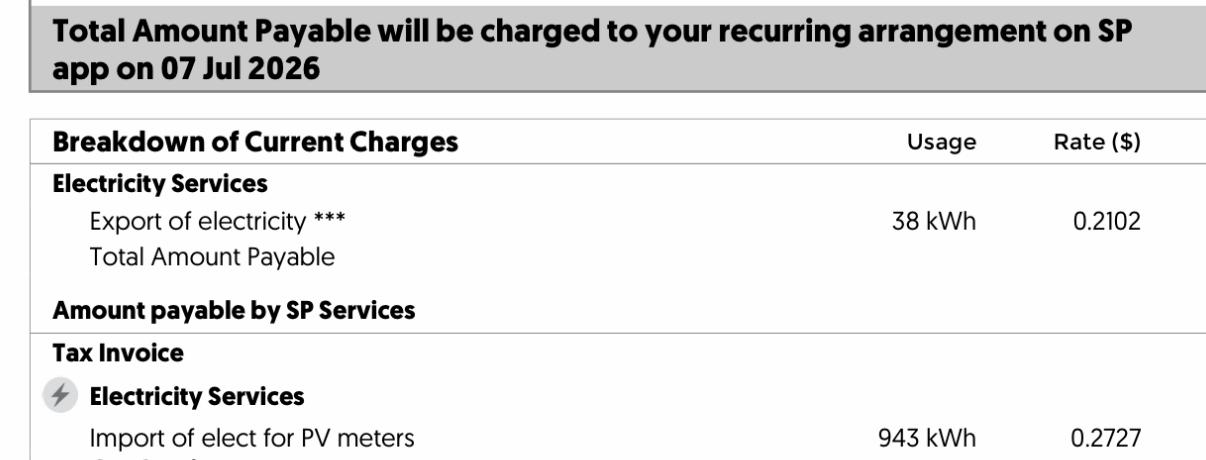
Yes. As of 2026, homeowners export surplus solar power to SP Group at approximately S$0.20/kWh under the Simplified Credit Treatment (SCT) scheme (rate revised quarterly by SP Group). A bi-directional smart meter is installed as part of the solar system commissioning to track both electricity import from the grid and export to the grid automatically. The export credit appears as a reduction on your monthly SP Group electricity bill.
Most residential customers achieve payback in 3–6 years. High daytime electricity users can break even in 3–4 years. After payback, you generate essentially free electricity for 20+ years. After payback, systems generate free electricity for 25-27+ years of the 30-year warranty period. High-consumption households with large roof areas can achieve 2.5-3 year payback. Factors affecting payback include system size, roof orientation, household consumption patterns, SP Group tariff rates (approximately S$0.30/kWh retail in 2026), and export rates (approximately S$0.20/kWh).
Solar panel installation in Singapore starts from approximately S$1,200 per kWp for larger residential landed-home systems in 2026. A typical 10–30 kWp landed home system runs S$15,000–S$45,000, depending on system size, roof type, and equipment selected. Smaller systems carry a higher per-kWp price due to fixed setup costs spread across less capacity. Commercial and industrial rooftops benefit from further pricing efficiency at scale. Rezeca provides itemised quotes with full 30-year ROI projections at no cost.
SP Group: 2–4 weeks. URA: 4–8 weeks. BCA: 2–3 weeks. Total: typically 4–8 weeks.
Not necessarily. SP Group and LEW are always required. URA, BCA, SCDF only in specific circumstances.
SP Group installs and owns it. Rezeca coordinates scheduling as part of commissioning.
4–8 weeks total. Physical installation is 2–5 days. Regulatory approvals account for most of the timeline.
Yes — positively. Every tariff increase raises the value of self-consumed solar, making solar a natural hedge against energy price rises.
3–6 years for most landed homes. GCBs with large systems can achieve 3–4 years.
Yes — mounting hardware, cabling, bi-directional smart meter, SP Group/EMA fees, and in some cases URA/BCA approvals are included in Rezeca proposals.
S$1,800–S$2,800 per kWp installed. Larger systems benefit from lower per-kWp pricing.
A typical bungalow with a 15–30 kWp system costs S$25,000–S$45,000 installed. Payback is typically 3–5 years.
Yes. Over 100 commercial installs (warehouses, factories, schools). Systems range from 50 kWp to 1+ MWp.
Yes. We manage every regulatory submission (LEW, QP, SCDF, SP Group, EMA) on your behalf.
Dedicated technical support (9170 5539), monitoring setup, and full warranty management for the system's lifetime.
8–10 weeks total for residential. 3–6 months for commercial. Our established relationships accelerate regulatory approvals.
We use EMA-registered LEWs, BCA QPs, and are a BizSAFE STAR company. We work exclusively with Tier-1 certified brands.
1,300+ residential and 100+ commercial projects completed over 17 years. One of Singapore's most proven track records.
Yes. It connects to your main distribution board and supplies all appliances (AC, lights, EV chargers) simultaneously.
Grid-tied systems automatically shut down for safety to protect utility workers from back-fed electricity.
Check the inverter and app for error codes. Inspect for shading or debris. Contact Rezeca; our team responds within 48 hours.
Via a smartphone app or web dashboard (Huawei/Sungrow). You can see daily generation and system health alerts.
Minimal effort. Check for debris every 6–12 months. Annual panel cleaning is recommended.
30-year panel product & performance warranty; 5 or 10-year inverter warranty. Backed by Tier-1 manufacturers.
25–30+ years. Inverters last 5–12 years and may need one replacement. Panels carry 30-year performance guarantees.
High heat reduces efficiency by 10–15%. Rezeca uses Tier-1 panels with low temperature coefficients to mitigate this.
Yes, at 15–30% capacity. Singapore’s year-round sun ensures high total annual output despite rainy periods.
A 10 kWp system generates ~12,000–13,000 kWh annually (based on 3–4 peak sun hours/day).
Yes. Solar operates independently of your retailer (Geneco, Sembcorp, etc.). You can switch retailers even after going solar.
A Licensed Electrical Worker is legally required to endorse the system and ensure it meets EMA standards for grid connection.
Generally no, unless panels are >1m above the roofline, or in conservation/aviation (CAAS) zones.
(Commercial) Requires firefighting access paths, edge setbacks, emergency DC shutdown switches, and proper labeling.
LEW for electrical design, QP for structural/SCDF (commercial), SP Group for grid connection. Rezeca manages all paperwork.
Equatorial sun paths have minimal variation. The 5–10% gain doesn't justify the high cost and maintenance of moving trackers.
Yes, but it's cheaper to size correctly initially. Expansion requires compatible inverter capacity and new regulatory approvals.
Cooler. Panels shade the roof, reducing heat gain. Homeowners report cooler top floors and lower AC usage. They also reduce rain noise.
Complete repairs/waterproofing before installation. If needed later, panels can be temporarily removed and reinstalled (typically from S$250).
Generally not recommended. High costs (S10k–S13k) and Singapore’s reliable grid make them financially redundant unless you need backup power.
Mounting depends on roof type (anchors, clamps, or hooks). Rezeca installations include a 5–10 year workmanship warranty against water ingress.
Concrete, metal, and clay tiles. Metal uses seam clamps; concrete uses stumps; tile uses brackets. These methods avoid additional drilling.
Yes. North-South facing at 10–15° tilt is optimal for Singapore. This angle also assists with rain cleaning.
On-site work takes 1–2 weeks. Total timeline (including permits, testing, and SP connection) is 8–10 weeks.
① Site assessment → ② Design/Proposal → ③ Permits (LEW/SP) → ④ Installation (7–14 days) → ⑤ Commissioning → ⑥ Monitoring setup.
Yes. Shading significantly reduces output. Even partial shade on one panel can impact the entire string with standard inverters.
Most are. Key factors are unshaded area and roof condition. South or North-facing roofs with 10–15° tilt are ideal. Free assessments are available.
Each 1 kWp requires 6–8 sqm. A 10 kWp system needs 60–80 sqm; a 5 kWp starter system needs about 30–40 sqm.
No. HDB rooftops are common property managed by Town Councils. HDB solar is deployed through the government SolarNova programme.
Yes, but MCST approval is required. You must also pay for Building LEW approval separately. Rezeca provides technical docs to support the application.
Yes. Owners can install directly with standard LEW and SP approvals. Rezeca has installed on detached, semi-detached, and terrace homes.
If your bill is below S$150/month, payback extends to 5–8 years. It still makes sense if you plan to stay long-term or want to future-proof against rising tariffs.
Generally yes. It improves buyer appeal by lowering operating costs. A fully paid-off system is a strong selling point, similar to a smart home upgrade.
Minimal costs—typically 1.5–2% of system price annually (from S$300). This covers annual electrical checks and panel cleaning.
Yes. Banks like UOB (U-Solar) and OCBC offer green loans. Alternatively, a Solar PPA requires zero upfront cost for large commercial projects (pay only for energy used).
Most homeowners save 30–80% on their electricity bill depending on daytime usage. A 10 kWp system typically generates 12,000–13,000 kWh/year. At the Q1 2026 regulated tariff (29.11¢/kWh incl. GST), savings scale with how much solar you self-consume. Excess electricity is exported and credited under the normal grid sell-back scheme at the prevailing tariff minus grid charges.
The developer owns/maintains the system at no cost to you. You pay a discounted electricity rate (typically 10–20% below tariff) for 20–25 years. Ideal for businesses.
There are no direct cash subsidies for residential solar. However, the economics work without them. Businesses may access green financing and capital allowances.
Solar panel installation in Singapore starts from approximately S$1,200 per kWp for larger residential landed-home systems in 2026. A typical 10–30 kWp landed home system runs S$15,000–S$45,000, depending on system size, roof type, and equipment selected. Smaller systems carry a higher per-kWp price due to fixed setup costs spread across less capacity. Commercial and industrial rooftops benefit from further pricing efficiency at scale. Rezeca provides itemised quotes with full 30-year ROI projections at no cost.
The average is 3–6 years. High daytime users can break even in 3–4 years. After payback, you generate free electricity for 20+ years.
Get Your Custom
Solar Plan
Prefer to chat? Tap the WhatsApp icon below to reach our team instantly.
Singapore’s pioneer in residential and commercial solar installations since 2009.

Copyright © 2026 Rezeca Renewables.