Case Study: 89.25 kWp Solar on a District 10 GCB near the Botanic Gardens
How Rezeca designed and installed one of Singapore's largest residential solar systems: an 89.25 kWp array with 210 panels on a District 10 Good Class Bungalow near the Singapore Botanic Gardens, saving an estimated S$36,500 a year.
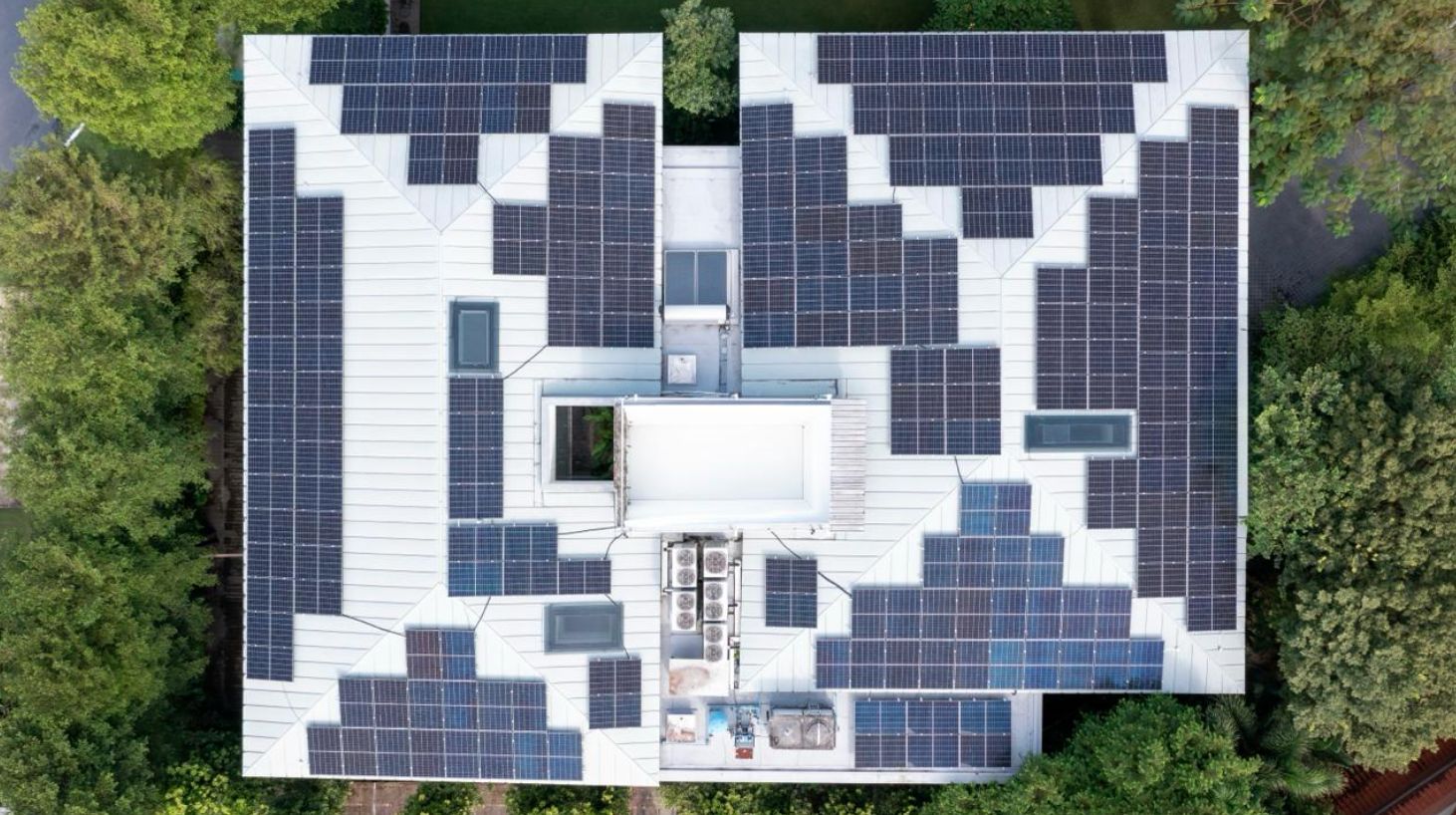
In 2023, Rezeca Renewables completed one of Singapore's largest residential solar installations: an 89.25 kWp system on a Good Class Bungalow in District 10, on the Bukit Timah and Tanglin fringe beside the Singapore Botanic Gardens. With 210 Trina Solar panels across a metal roof and an estimated annual generation of over 102,000 kWh, this project demonstrates what large-scale residential solar looks like in Singapore and the financial returns it delivers for landed homeowners with high electricity consumption.
Project Overview: 89.25 kWp on a Good Class Bungalow
Good Class Bungalows (GCBs) in Singapore's prime District 10 have large roof areas that are ideal for solar. This District 10 property, on the Bukit Timah and Tanglin fringe next to the Singapore Botanic Gardens, had a metal roof with ample, unshaded surface area, making it a strong candidate for a high-capacity residential system.
System specifications:
- System size: 89.25 kWp (one of the largest residential installations in Singapore)
- PV modules: 210 × Trina Solar Vertex S 425Wp monocrystalline panels
- Inverters: 2 × Huawei SUN2000-40KTL (80 kW total inverter capacity)
- Roof type: Metal roof
- Completion: 2023
At 89.25 kWp, this system is roughly 9× the size of a typical Singapore terrace house installation (8–10 kWp) and among the largest residential solar arrays on a single property in Singapore.
You can also see this installation in our project portfolio, with aerial photography of the finished array: Cluny Hill Good Class Bungalow, 89.25 kWp on a metal roof.

Why a Metal Roof Is Ideal for Solar in Singapore
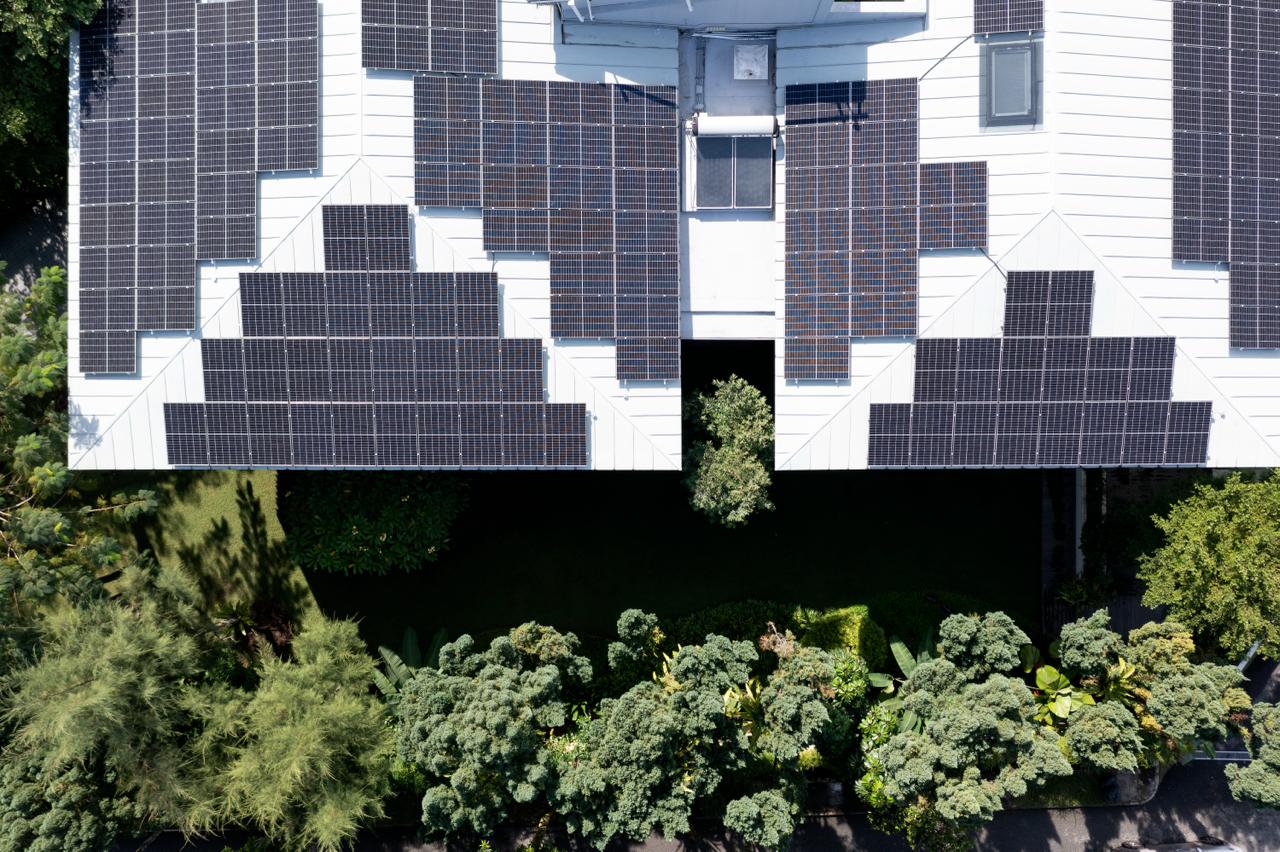
Metal roofs are the most solar-friendly roof type for Singapore landed homes. Unlike tile or RC (reinforced concrete) roofs, metal roofs allow for non-penetrative rail mounting, meaning panels are clamped directly to the standing seams without drilling into the roof surface.
For this District 10 GCB, the metal roof provided three key advantages:
First, faster installation, non-penetrative clamps eliminate the need for roof anchoring or waterproofing work, reducing the installation timeline. Second, zero risk of water ingress, because no holes are drilled through the roof surface, there is no risk of leaks over the system's 25-year lifespan. Third, better ventilation, the natural air gap between panels and the metal surface helps reduce operating temperatures, which improves panel efficiency in Singapore's heat.
For a detailed comparison of how different roof types affect your solar installation, see our guide: Tile Roof vs Metal Roof vs RC Roof: Which Is Best for Solar in Singapore?
System Design: 210 Trina Solar Panels and Huawei Inverters
Rezeca's system designers selected the Trina Solar Vertex S 425Wp monocrystalline panel for this project. Trina Solar is one of the world's largest panel manufacturers and a Tier 1 bankable brand, an important consideration for a system of this scale and investment.
Each Vertex S panel produces 425 watts at Standard Test Conditions (STC), delivering high energy density per square metre. With 210 panels, the system achieves a total rated capacity of 89.25 kWp.
On the inverter side, two Huawei SUN2000-40KTL string inverters convert the DC output from the panels into AC electricity for the home. Huawei's commercial-grade inverters offer built-in monitoring, high conversion efficiency (up to 98.6%), and the reliability needed for a system generating over 100,000 kWh annually.
For homeowners comparing panel options, see: Best Solar Panel Brands in Singapore 2026: Aiko, LONGi, Jinko and Trina Compared
Estimated Energy Generation and Financial Returns
Based on Singapore's average solar irradiance of approximately 1,150 kWh per kWp per year, this 89.25 kWp system is estimated to generate around 102,600 kWh of electricity annually.
Here is how that translates into financial returns for the homeowner:
- Estimated annual generation: ~102,600 kWh
- Estimated annual electricity savings: ~S$36,500 (based on prevailing SP Group tariff rates)
- Estimated monthly savings: ~S$3,040
- Estimated 25-year lifetime savings: ~S$912,000 (before accounting for tariff increases)
- Estimated CO₂ offset: ~42 tonnes per year (equivalent to taking approximately 9 cars off the road)
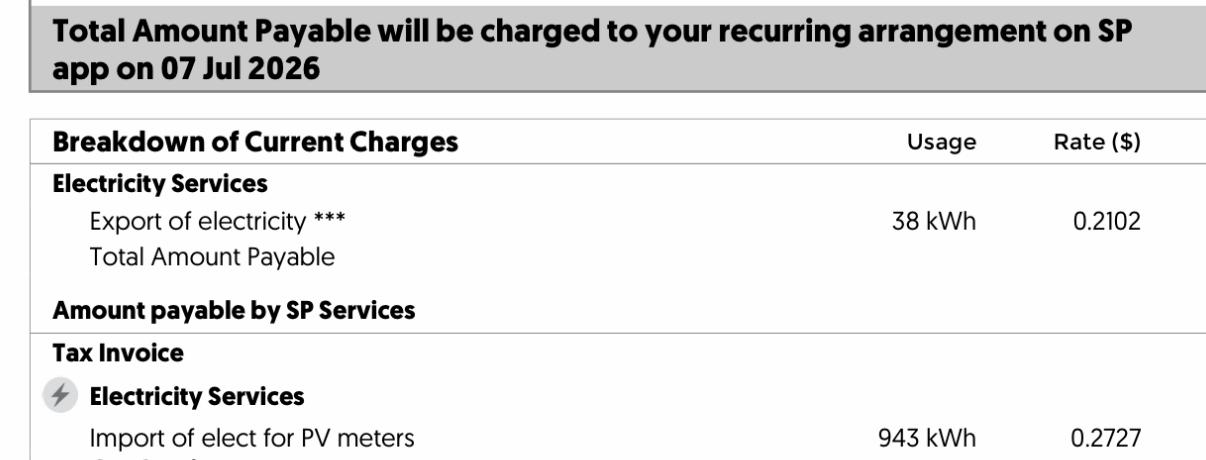
These figures are estimates based on system specifications and standard Singapore conditions. Actual results depend on real-time electricity consumption, weather patterns, and tariff rates. Under Singapore's Simplified Credit Treatment (SCT) scheme, any excess solar electricity not consumed by the household is exported to the national grid and credited against the homeowner's SP Group bill.
Good Class Bungalows typically have higher electricity consumption than smaller landed homes due to larger living areas, pools, and air-conditioning loads, which means a larger proportion of the solar generation is consumed on-site rather than exported. This self-consumption advantage improves the overall financial return.
To understand how solar savings and payback work in detail: Is Solar Worth It in Singapore? The Honest ROI, Savings and Payback Guide
Approvals and Installation Process
A GCB solar installation of this scale requires coordination across multiple regulatory bodies in Singapore. Rezeca managed the full approval process on behalf of the homeowner, including the Licensed Electrical Worker (LEW) assessment, SP Group application for the grid-tied connection, and any necessary clearances.
The project moved from site survey to commissioning within the standard timeline for a GCB installation. Metal roofs significantly streamline the physical installation phase, what can take several weeks on a tile roof may be completed faster on metal due to the simpler mounting method.
Rezeca handles the entire process end-to-end, from system design and regulatory submissions through to installation, commissioning, and SP Group meter activation. Homeowners do not need to engage separate contractors or manage submissions themselves.
What This Means for GCB and Large Landed Homeowners
This District 10 project is a clear example of the financial case for solar on large Singapore properties. With estimated savings exceeding S$36,000 per year and a system lifespan of 25 years, the return on investment is substantial, particularly for GCBs and bungalows with monthly electricity bills above S$2,000.
If you own a Good Class Bungalow, bungalow, or large semi-detached home in Singapore and want to understand what solar could look like for your property, Rezeca offers a free, no-obligation site assessment. We have completed 1,500+ installations across Singapore since 2009.
For a broader look at residential solar costs: Solar Panel Cost in Singapore (2026): Full Price Guide for Landed Homes
See our other completed project: Case Study: 57.33 kWp Solar on a Holland Road Good Class Bungalow
Browse the full portfolio of Rezeca installations, including this one, in our Cluny Hill project entry and across our residential projects.
Frequently Asked Questions
How large a solar system can a Good Class Bungalow in Singapore support?
Most GCBs in Singapore can accommodate systems between 30 kWp and 100 kWp, depending on the usable roof area, roof orientation, and shading. This District 10 property supported an 89.25 kWp system with 210 panels, one of the largest residential installations in Singapore. A typical GCB with a clear metal roof can often fit 60–90 kWp.
How much does a homeowner save with an 89 kWp solar system in Singapore?
An 89.25 kWp system in Singapore is estimated to generate around 102,600 kWh per year. Based on current SP Group electricity tariffs, this translates to approximately S$36,500 in annual electricity savings, or roughly S$3,040 per month. Over the 25-year system lifespan, estimated cumulative savings exceed S$900,000.
Why did Rezeca choose Trina Solar panels and Huawei inverters for this project?
Trina Solar is a Tier 1 globally bankable panel manufacturer, and the Vertex S 425Wp monocrystalline module offers high efficiency and energy density, critical when maximising output on a residential roof. The Huawei SUN2000-40KTL inverters are commercial-grade units with built-in monitoring and up to 98.6% conversion efficiency, suited for large residential systems generating over 100,000 kWh annually.
What approvals are needed for a GCB solar installation in Singapore?
A GCB solar installation requires a Licensed Electrical Worker (LEW) assessment, SP Group application for grid connection, and potentially clearances from URA and BCA depending on the property. Rezeca manages the entire approval process on behalf of the homeowner, from regulatory submissions to SP Group meter activation, so you do not need to coordinate with multiple agencies yourself.
Considering solar for your Singapore home?
Rezeca offers a free on-site assessment, no-obligation quotes, and full 25-year ROI projections based on your actual property. Own your system outright or finance it through UOB U-Solar, backed by 17 years of experience and 1,300+ landed-home installations.
Estimate your savingsWhatsApp:+65 9839 9044 | Email:enquiry@rezeca.com

All your solar questions, answered
Everything Singapore landed homeowners need to know about solar panel installation, costs, approvals, and returns.
Get Your Custom
Solar Plan
Prefer to chat? Tap the WhatsApp icon below to reach our team instantly.