Tile Roof vs Metal Roof vs RC Roof: Which Is Best for Solar in Singapore?
Tile, metal or RC flat roof, which is best for solar in Singapore? All three work well. Here is how each affects mounting, cost, waterproofing and how many panels you can fit.
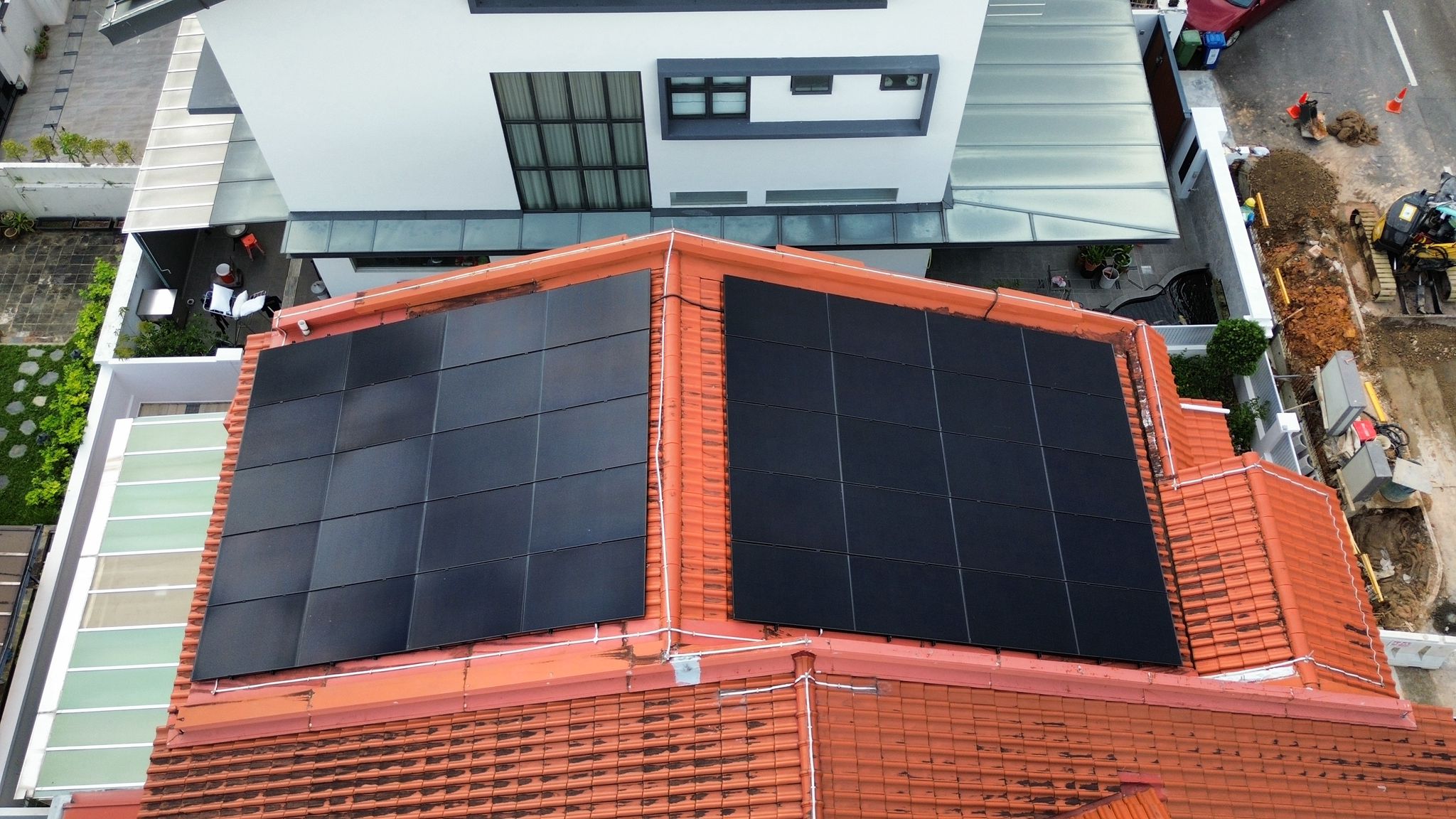
The quick answer: All three common Singapore roof types, tile, metal, and RC (reinforced concrete) flat, work well for solar. The differences are in mounting method, waterproofing risk, cost, and how many panels fit. Metal roofs (especially standing-seam) are often the easiest and lowest-risk, because clamps grip the seams without drilling holes. Tile roofs use hooks under the tiles and give a naturally good tilt for drainage and airflow. RC flat roofs are the most flexible and often the cheapest to mount, but tilted rows shade each other, so usable area is lower per square metre. Your roof type rarely decides whether to go solar; it shapes how the system is designed.
Why your roof type matters (and why it usually isn't a dealbreaker)
Rezeca has installed solar across every common landed-home roof in Singapore since 2009, and the honest headline is this: there is no roof type that rules solar out. What changes between tile, metal, and concrete is the mounting hardware, the waterproofing approach, the labour involved, and, on flat roofs, how densely you can pack panels. A good installer assesses all of this during the site survey and designs around your specific roof. Below is what to expect from each.
Tile roofs (clay or concrete tiles)
Common on homes built before the 2000s. Panels are mounted on aluminium rails fixed to roof hooks that tuck under the tiles and bolt to the rafters beneath.
Strengths: The sloped surface gives panels a natural tilt for rain runoff and an air gap underneath that helps them run cooler, which is good for output in our heat. Tiled roofs also look tidy with panels following the roof line.
Watch-outs: Tiles are brittle, so careful workmanship matters, hooks must be seated correctly and any tile that is cut or lifted must be resealed so there is no leak path. This is skilled work, and it is where a careless installer can cause problems years later. Expect installation to cost modestly more than on a flat RC roof, on the order of a small single-digit premium, because it is more labour-intensive.
Metal roofs (standing seam and corrugated)
Common on newer homes and many Good Class Bungalows. The mounting method depends on the profile.
Standing seam is close to ideal: specialised clamps grip the raised seams, so panels attach with no drilling and no roof penetration at all. That means effectively zero added waterproofing risk, and a fast, clean install.
Corrugated metal is mounted with brackets fixed through the sheet at the ridges, sealed with quality gaskets. Slightly more involved than standing seam, but still straightforward and reliable when done properly.
Strengths: Generally the lowest-risk roof to work on, often the quickest, and the standing-seam clamp method avoids penetrations entirely. Cost is typically comparable to, or a little lower than, tile.
RC (reinforced concrete) flat roofs
Common on modern homes and many extensions. Panels sit on a tilted mounting frame, usually held down by weighted ballast (concrete blocks) so the roof membrane isn’t penetrated, or bolted where ballast isn’t suitable.
Strengths: The most flexible option, panels can be angled and oriented to the ideal direction regardless of how the building faces, which a sloped roof can’t. Mounting is often the cheapest, and a non-penetrating ballasted system keeps the waterproofing intact.
Watch-outs: Because the tilted rows would shade the row behind if packed tightly, they must be spaced apart. That inter-row spacing reduces the usable area by roughly 20% to 30% compared with a pitched roof of the same footprint, so a flat roof fits fewer panels per square metre. Roof waterproofing condition should also be checked first, since it is easier to redo before panels go on than after.
Side by side
| Roof type | Mounting | Waterproofing risk | Relative cost | Panel density |
|---|---|---|---|---|
| Tile | Hooks under tiles + rails | Low to moderate (workmanship-dependent) | Slightly higher | High (follows roof slope) |
| Metal (standing seam) | Clamp-on, no penetration | Very low | Comparable or lower | High |
| RC flat | Tilted frames, usually ballasted | Low (non-penetrating) | Often lowest | Lower (inter-row spacing) |
Relative cost is indicative and varies with roof access, height, system size, and condition. A site survey gives the real figure.
What actually matters more than roof type
Roof material shapes the design, but three other things usually matter more for how much solar you can install and what it will generate: usable unshaded area, orientation, and structural condition. A flat RC roof with a large clear expanse can still out-produce a small, cluttered tiled roof despite the density penalty. This is exactly what a site assessment sorts out, and it feeds directly into how many panels your home actually needs. If your roof is due for re-waterproofing or repairs, it is almost always cheaper to do that before the panels go up.
A note on mixed and older roofs
Many landed homes have more than one roof surface, for example a tiled main roof plus a flat RC extension. That is common and fine; the system is simply designed across both, using the right mounting for each. For older roofs, the structural check during the survey matters more, and in some cases a Professional Engineer’s endorsement is appropriate, which your installer arranges as part of the approvals and design process.
Frequently asked questions
Which roof type is best for solar panels in Singapore?
All three common types, tile, metal, and RC flat, work well. Standing-seam metal is often the lowest-risk and quickest because clamps avoid drilling; tile gives a good natural tilt and airflow; RC flat is the most flexible for orientation but fits fewer panels per square metre due to inter-row spacing. The best choice is whatever your existing roof is, designed properly.
Can you install solar panels on a flat concrete roof?
Yes. Panels sit on tilted frames, usually held by weighted ballast so the roof isn’t penetrated. Flat RC roofs are flexible because panels can face the ideal direction, but tilted rows must be spaced apart to avoid shading each other, which reduces usable area by around 20% to 30% versus a pitched roof.
Do solar panels damage or leak a tiled roof?
Not when installed correctly. Panels mount on hooks that tuck under the tiles and fix to the rafters, and any disturbed tile is resealed. Tiles are brittle, so workmanship is what matters, which is a good reason to use an experienced installer.
Is a metal roof good for solar?
Yes, often the best to work with. Standing-seam metal roofs allow clamp-on mounting with no drilling and no penetration, giving very low waterproofing risk and a fast install. Corrugated metal is also fine, mounted with sealed brackets.
Does my roof type change how many panels I can fit?
Yes. Pitched tile and metal roofs fit panels along the slope at high density. Flat RC roofs fit fewer per square metre because tilted rows need spacing to avoid shading. Usable unshaded area and orientation matter as much as material, which a site survey confirms.
Not sure what your roof can take?
Whatever your roof is made of, the way to know is to look at it. We are happy to assess your specific roof, tile, metal, concrete, or a mix, and show you what system it can support and what you’d generate, no pressure, just the honest picture.
Rezeca Renewables has installed solar for landed homes and businesses across Singapore since 2009, with over 1,500 installations and 45+ MWp to date, including 1,300+ residential landed homes.
Considering solar for your Singapore home?
Rezeca offers a free on-site assessment, no-obligation quotes, and full 25-year ROI projections based on your actual property. Own your system outright or finance it through UOB U-Solar, backed by 17 years of experience and 1,300+ landed-home installations.
Estimate your savingsWhatsApp:+65 9839 9044 | Email:enquiry@rezeca.com

Get Your Custom
Solar Plan
Prefer to chat? Tap the WhatsApp icon below to reach our team instantly.