How Many Solar Panels Does a Singapore Landed Home Actually Need?
How many solar panels does your home need? It depends on your roof, your electricity use and your budget, not just your house type, here's how to work out your number, by property type.
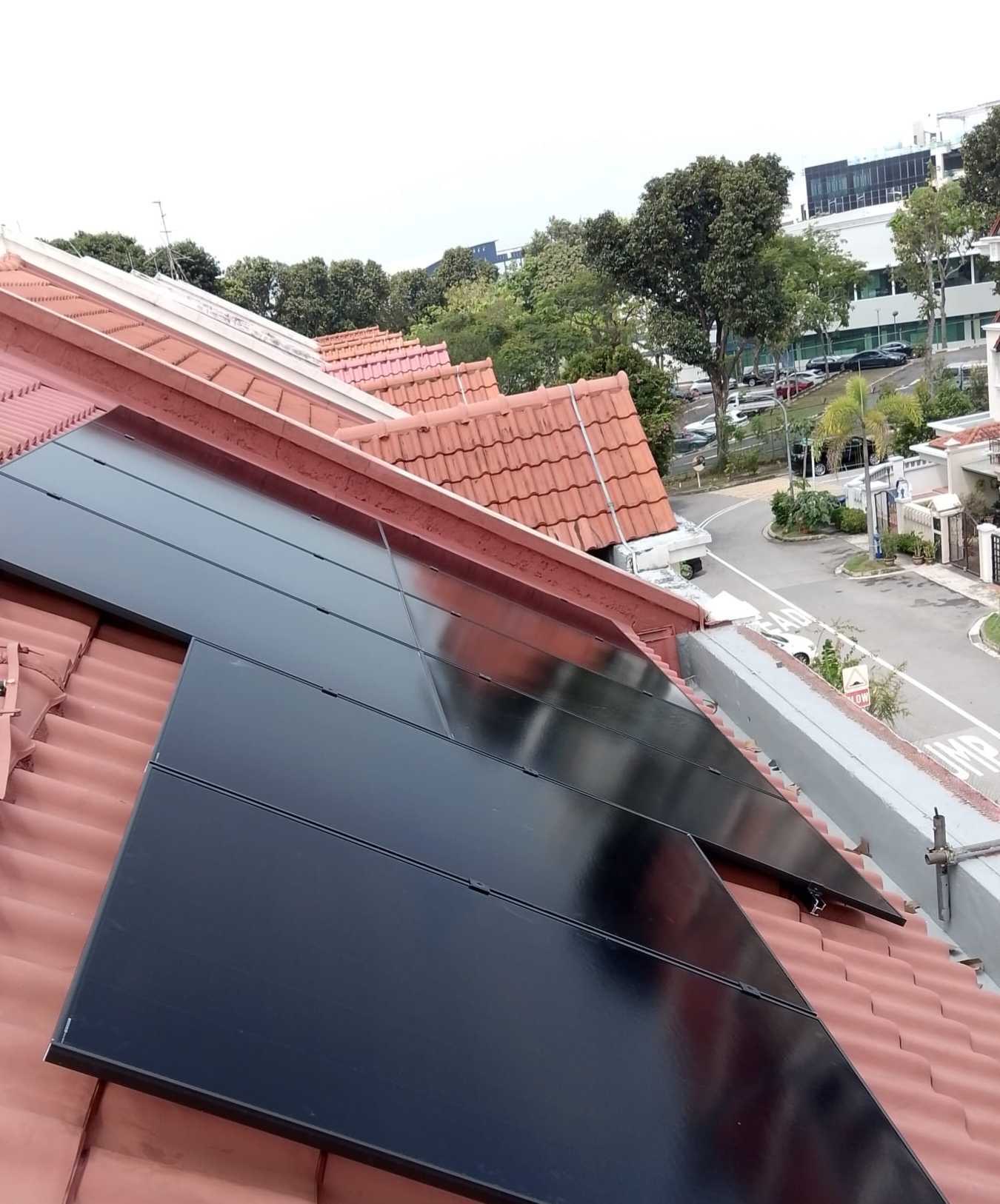
The quick answer: There’s no single number, it depends on your roof, your electricity use, and your budget, not just your house type. As a rough guide, most Singapore terrace homes run 11–34 panels (5–15 kWp), semi-detached homes 27–68 panels (12–30 kWp), bungalows 45–91 panels (20–40 kWp), and Good Class Bungalows anywhere from 68 to 270+ panels (30–120 kWp). Panel count itself isn’t the number that matters. kWp (system capacity) is, because panel wattage varies by brand. A solar engineer sizes your system to your usable roof area, your monthly electricity consumption, and your budget, in that order.
So, how many solar panels do you actually need?
Ask five installers this question and you’ll get five different panel counts, even for the same roof. That’s not because anyone’s guessing. It’s because “how many panels” is really three separate questions wearing one trench coat: how much roof space do you have, how much electricity do you use, and how much do you want to spend. The panel count falls out of the answer to those, not the other way round.
We’ve sized systems for more than 1,300 residential landed homes since 2009, from single-storey terraces to Good Class Bungalows with roof arrays in the hundreds of panels. The short version: don’t start by picking a panel count. Start by understanding what drives it, and the right number becomes obvious.
Why kWp matters more than panel count
Solar systems are sized in kWp (kilowatt-peak), the system’s rated output under standard test conditions, not in number of panels. That matters because the same 10 kWp system might be 22 panels of one brand or 18 of another, depending on panel wattage. Today’s high-efficiency residential panels typically run 440–500 Wp each, though this shifts as manufacturers release new models (our panel brands comparison has current specs). A quick way to translate: divide your target kWp by your panel’s wattage. A 15 kWp system at 440 Wp per panel is roughly 34 panels; the same 15 kWp at 500 Wp per panel is 30 panels.
This is also why “how many panels do I need” answered with just a number, with no kWp attached, is close to meaningless. Two homes with “30 panels” could have systems that differ by 30% in output, depending on the panel used. When you talk to an installer, anchor the conversation on kWp and expected annual generation (kWh), and let panel count follow.
How many panels, by property type
Here’s what Rezeca typically installs across each landed property type, based on 17 years of projects:
| Property type | Typical system | Panel count (at 440–500 Wp) | Roof area needed |
|---|---|---|---|
| Terrace house | 5–15 kWp | ~11–34 panels | 30–80 sqm |
| Semi-detached | 12–30 kWp | ~27–68 panels | 72–180 sqm |
| Bungalow | 20–40 kWp | ~45–91 panels | 120–240 sqm |
| Good Class Bungalow | 30–120 kWp | ~68–273 panels | 180–720 sqm |
Roof-area figures use the standard 6–8 sqm per kWp rule of thumb; actual usable area depends on roof shape, shading, and setback requirements.
A few things worth calling out in that table. First, the ranges are wide within each property type: a 5-bedroom corner terrace with a big rear extension can out-roof a modest semi-detached. Second, Good Class Bungalow systems have the widest range of all, because GCB plots vary from just over the 1,400 sqm minimum to multi-acre estates, and clients differ on how much of the roof they actually want covered. Third, none of these numbers account for consumption yet: a small household in a large bungalow may not need anywhere near 40 kWp, even if the roof could take it.
Worked example: a 100 sqm terrace roof
Say you own a terrace house with roughly 100 sqm of roof, most of it unshaded and facing a reasonable direction. At 6–8 sqm per kWp, that roof could theoretically hold a 12.5–16.7 kWp system, call it 13–15 kWp once you account for a chimney, a water heater, and a small shaded corner from the neighbour’s tree. At 450 Wp per panel, that’s roughly 29–33 panels. Whether you actually install all of them depends on your electricity bill: a household using 1,200 kWh a month is a good match for a system near the top of that range, while a household using 700 kWh a month might be better served by a smaller 10 kWp system (~22 panels) that self-consumes more of what it generates, rather than maximising roof coverage and exporting the surplus.
Does roof orientation or tilt change the panel count?
Yes, though usually at the margins rather than dramatically. Panels perform best facing north or south with a 10–15° tilt, which is close to ideal for most Singapore roofs given our near-equatorial sun path. East- or west-facing roof sections still generate meaningfully, though solar panels aren’t binary, and may generate 5–15% less than an optimally oriented section of the same size, which occasionally tips the sizing decision toward a few more panels to hit the same target output. Flat RC roofs sidestep the question almost entirely, since panels are mounted on frames tilted to the ideal angle regardless of the building’s orientation. This is one of several checks a solar engineer runs during a site visit, alongside shading from trees, aircon condenser units, and adjoining buildings, all of which affect how many of your “theoretical” panels actually pay their way.
What actually decides your number: three inputs
1. Usable roof area. Each kWp of solar needs roughly 6–8 sqm of unshaded, structurally sound roof. A 10 kWp system needs 60–80 sqm; a 5 kWp starter system needs about 30–40 sqm. “Usable” is the key word: chimneys, water tanks, skylights, and shaded corners from neighbouring trees or taller buildings all subtract from the raw roof area. This is exactly why a site visit, not a satellite-image estimate, produces the real number.
2. Household electricity consumption. Singapore landed homes typically use 800–3,000+ kWh a month, well above the 300–600 kWh typical of an HDB flat. That’s a big reason landed homes are Singapore’s best fit for rooftop solar. Annual yield in Singapore typically runs 1,100–1,350 kWh per installed kWp, depending on your roof’s shading and orientation and the year’s weather. Well-oriented, largely unshaded roofs sit toward the top of that range. A 15 kWp system, for example, generates roughly 16,500–20,000 kWh a year. If your household consumes far less than your roof could generate, sizing to 100% of roof capacity may mean exporting more than you self-consume. That’s not a bad outcome under the Simplified Credit Treatment (SCT) scheme, but it’s worth knowing going in, since self-consumption is generally worth more per kWh than export credits.
3. Budget. At roughly S$1,200 per installed kWp in 2026, system cost scales close to linearly with size (see our full cost guide for the breakdown by property type). Most homeowners find their real answer sits at the intersection of what the roof can hold, what their consumption justifies, and what fits comfortably in budget, which is rarely the maximum possible system size.
Fewer, better panels vs. more, cheaper panels
On a roof with generous space, this question barely matters: more panels at a lower price per watt often wins. On a tighter roof, it matters a lot. Higher-efficiency panels (23%+, using ABC or TOPCon cell technology) generate more power per panel, which means fewer panels for the same kWp: useful when your usable roof area is the binding constraint, not your budget.
A useful way to think about it: on a compact terrace roof with room for only 12–14 standard panels, switching to premium high-efficiency panels might let you fit the equivalent of 15–16 standard panels’ worth of capacity in the same footprint. Over a 25–30 year system life, that extra headroom compounds into thousands of dollars of additional generation. We cover the efficiency and heat-performance trade-offs by brand in our panel comparison guide, but the short version is: on a small roof, prioritise efficiency; on a large roof, prioritise value, since you’re less likely to run out of space.
Can you start smaller and add panels later?
Often, yes, with a caveat. It’s cheaper to size correctly from the start than to expand later, because expansion needs spare capacity in your existing inverter and a fresh round of regulatory approvals, not just more panels on the roof. If your roof has unused space and your inverter has headroom, adding panels in a second phase is possible. If expansion is even a possibility, say so at the design stage. It costs nothing to plan for it and can save a full system upgrade later. This is a common question for households expecting to add air-conditioning capacity, a pool, or an EV charger down the line. Sizing with some future headroom in mind is cheap insurance against a bigger job in a few years.
How do you find your exact number?
Every number in this article is a starting point for a conversation, not a substitute for one. The only way to get your actual number is a site assessment: an engineer measures your usable roof area, checks orientation and shading, reviews your last few SP Group bills for your real consumption pattern, and models a handful of system sizes against your budget. That’s what turns “somewhere between 11 and 34 panels” into an exact, contracted number for your specific roof.
Frequently asked questions
How many solar panels does a typical Singapore landed home need?
It varies widely by property type and roof size: typically 11–34 panels for a terrace house, 27–68 for a semi-detached home, 45–91 for a bungalow, and upwards of 68 panels for a Good Class Bungalow, based on today’s 440–500 Wp panels. The right number for your home depends on usable roof area, electricity consumption, and budget, confirmed during a site assessment.
Is it better to install fewer high-efficiency panels or more standard panels?
On a roof with plenty of space, more panels at a lower price per watt is usually the better value. On a tight roof, fewer high-efficiency panels can generate the same or more total output in less space, which matters when roof area, not budget, is the limiting factor.
How much roof space do I need for solar panels?
Roughly 6–8 sqm per kWp. A 10 kWp system needs about 60–80 sqm of usable roof area; a 5 kWp starter system needs around 30–40 sqm. Usable area excludes shaded sections and space taken by chimneys, tanks, or skylights.
Can I add more solar panels to my system later?
Often, yes, but it’s cheaper to size correctly from the start. Expansion needs spare inverter capacity and a fresh round of regulatory approvals, not just more panels. If expansion is a possibility, for a future EV charger or additional air-conditioning, for example, mention it at the design stage so the system is specified with room to grow.
How do I find out exactly how many panels my roof can fit?
A free on-site assessment is the only reliable way. An engineer measures your actual usable roof area, checks for shading, reviews your recent SP Group bills for your consumption pattern, and proposes system sizes matched to your roof and your goals.
Thinking about the right size for your roof?
Every roof is different, and the honest answer to “how many panels do I need” only comes from actually looking at yours. We’re happy to walk you through what your specific roof could support, and what different system sizes would mean for your bill. No pressure, just the numbers for your home.
Rezeca Renewables has installed solar for landed homes and businesses across Singapore since 2009, 1,500+ installations and 45+ MWp to date, including 1,300+ residential landed homes.
Considering solar for your Singapore home?
Rezeca offers a free on-site assessment, no-obligation quotes, and full 25-year ROI projections based on your actual property. Own your system outright or finance it through UOB U-Solar, backed by 17 years of experience and 1,300+ landed-home installations.
Estimate your savingsWhatsApp:+65 9839 9044 | Email:enquiry@rezeca.com
All your solar questions, answered
Everything Singapore landed homeowners need to know about solar panel installation, costs, approvals, and returns.
Get Your Custom
Solar Plan
Prefer to chat? Tap the WhatsApp icon below to reach our team instantly.

Copyright © 2026 Rezeca Renewables.