Rent-to-Own vs Owning Your Solar System in Singapore: An Honest Comparison
Rent-to-own and $0-upfront solar sound attractive, but who actually keeps the savings? An honest comparison of leasing versus owning your solar system in Singapore. From 1,500+ installs since 2009.
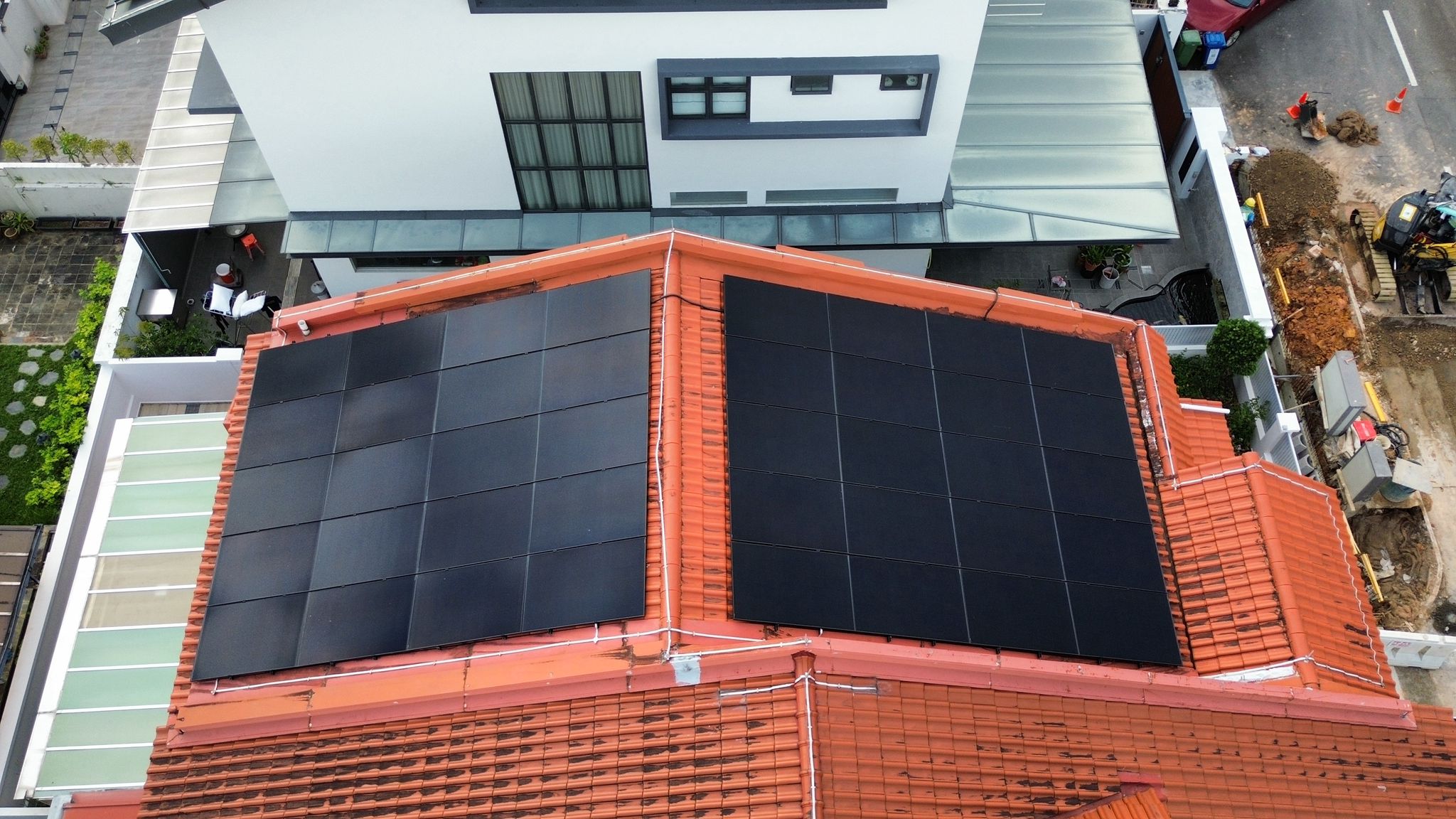
The quick answer: For most Singapore landed homeowners, owning your solar system outright beats rent-to-own or $0-upfront leasing. Under rent-to-own your bill still drops, but a fixed monthly fee, charged no matter how much you use or export, claws back part or all of those savings for the 5 to 10 years of the plan, the renewable energy certificates go to the provider, and you do not own the system until the plan ends, or earlier if you buy it out. It also costs more in total: a system that is around S$15,000 to buy outright can run to roughly S$17,300 over a 5-year plan or S$21,000 over 10 years. Own it and you keep 100% of the savings from day one, reach payback in 3 to 6 years, and the system is yours.
What "rent-to-own" and "$0-upfront" solar actually mean
You will see a couple of versions of no-money-down solar in Singapore: a lease (you pay a fixed monthly fee to use a system on your roof), and a rent-to-own plan (a lease that ends with you owning the system after the term, or earlier via a buy-out). The details differ, and note that "$0-upfront" is often not truly zero, many plans still require a deposit. But they share one thing that matters more than any of them: a third party, not you, owns the panels on your roof. That single fact shapes the whole deal: what you pay, what you keep, and for how long.
The real question: who owns the system, and what the monthly fee takes back
Solar reduces your electricity bill in two ways: the power you use straight from your panels cuts what you buy from the grid, and the surplus you export earns credits that further reduce the bill. Together, those are your savings. If you own the system, all of that is yours, 100%, from day one, along with the renewable energy certificates it earns and the system itself.
Under rent-to-own you still see that lower bill, but you pay a fixed monthly fee, regardless of how much you use or export, and that fee takes back part or all of the savings for the 5 to 10 years of the plan. The renewable energy certificates go to the provider, and the system only becomes yours once the plan ends, after 5 or 10 years, unless you buy it out earlier. So for years, much of the benefit flows straight back out as the monthly fee, while you are still working toward owning an asset you do not yet hold.
The numbers, side by side
Here is an illustrative comparison for a typical residential system that costs around S$15,000 to buy outright (about 9 to 10 kWp). Lease figures are illustrative and rounded.
| Buy outright | 5-year rent-to-own | 10-year rent-to-own | |
|---|---|---|---|
| Upfront | ~S$15,000 | Little or none (often a deposit) | Little or none (often a deposit) |
| Monthly fee | none | ~S$288, fixed regardless of output | ~S$175, fixed regardless of output |
| Total paid | ~S$15,000 | ~S$17,300 | ~S$21,000 |
| Who owns the system | You, from day one | Provider, until the term ends or you buy out early | Provider, until the term ends or you buy out early |
| Your bill savings (self-consumption + export credits) | You keep 100% from day one | Yours, but the fixed fee takes back part or all for 5 years | Yours, but the fixed fee takes back part or all for 10 years |
| Who keeps the RECs (renewable energy certificates) | You | The provider | The provider |
| After payback | 3 to 6 years, then free power that is all yours | You keep paying the fee until the term ends | You keep paying the fee until the term ends |
| Position over 25 to 30 years | Highest, you keep all of it | Lower, you paid a premium to rent first | Lower, you paid the largest premium |
| Best fit | Owners who can invest and want the fastest, largest return | Buyers who genuinely cannot pay upfront | Buyers who genuinely cannot pay upfront |
The pattern is clear. No-money-down costs more in total, roughly S$2,000 to S$3,000 more over five years, or about S$6,000 more over ten. And for those years the fixed monthly fee is eating into the savings the system produces, the certificates go to the provider, and the system is not yet yours. Owning instead reaches break-even in 3 to 6 years, after which the power is free and every dollar of the savings, plus the certificates, stays with you.
You own it at the end, but you pay for the wait
With rent-to-own, the system becomes yours at the end of the term, and most plans also let you buy it out earlier, on a declining buy-out schedule. On a five-year plan, for example, the buy-out might step down evenly from about S$15,000 in year one to S$0 at the end of the term. That is fair, but it makes the trade-off plain: the longer you rent before owning, the longer the fixed fee has been taking a share of your savings, and the longer the provider has held both the system and its certificates.
Watch for extras bundled only into the lease
One tactic worth knowing about. Some providers make the financed plan look stronger by bundling a longer workmanship warranty, free maintenance, or a performance guarantee into the lease, while quietly stripping those from the buy-outright option. Those are service terms, not a reason to rent. A reputable installer gives you a strong panel and inverter warranty, workmanship cover, maintenance and monitoring whether you pay upfront or spread the cost. Ask for the same terms on a system you own, then compare like with like, on price alone owning almost always wins.
The RECs go to the owner too
There is one more benefit that ownership keeps and renting gives away. Every megawatt-hour your system generates earns one tradeable renewable energy certificate (an I-REC). As the owner, those are yours. Under a rent-to-own or lease, the provider owns the system for the term, so during that time the RECs belong to them, not you.
Be clear-eyed about the size of this. REC prices have fallen from around S$50 each a couple of years ago to roughly S$10 to S$15 today, so for a single home this is a modest bonus, not a deciding factor. But it is one more stream of value that ownership keeps with you and renting hands to the provider, on top of the fee that is already taking a share of your savings.
For a Rezeca customer, ownership almost always wins
Our customers are landed homeowners, from compact terrace roofs to large estates, who are investing in their home for the long term and want the fastest and largest return on that investment. They tend to understand the money value of owning an asset like this outright. For that profile, ownership is the stronger choice by a wide margin: you pay once, you own the system, you keep every dollar of the savings and the RECs, and you reach payback in 3 to 6 years with 20-plus years of essentially free generation after that.
We are happy to talk through financing if it is genuinely the only way a project can go ahead, but we will always show you the ownership comparison first, because for the homes we work on it is almost always the better deal.
If upfront cost is the only obstacle
If the one-time payment is the only thing standing between you and owning your system, there are gentler ways to spread it than handing over ownership. You can pay by credit card, or arrange a bank instalment plan, which usually carries a small additional fee charged by the bank. Either way, you still own the system from day one, so you keep 100% of the savings and the RECs, and reach payback in 3 to 6 years. Even after the bank's fee, owning on instalments generally works out better than rent-to-own, where a fixed monthly fee takes a share of your savings until the term ends and the provider keeps the certificates in the meantime.
When might rent-to-own make sense?
To be fair to the model: no-money-down can suit a household that cannot or does not want to commit capital, or a commercial site that prefers to keep cash free and treat solar as an operating cost. In those cases the trade of a higher total cost, and a fee that takes a share of the savings, for zero upfront can be a reasonable one. It is simply not the right default for a landed home that can invest and wants to keep the full return.
How to read a $0-upfront solar offer
If you are weighing a rent-to-own or lease offer, ask these before you sign:
- Is it truly $0 upfront, or is there a deposit on top of the monthly fee?
- Is the monthly fee fixed regardless of how much the system generates, and does it rise each year?
- Over the full term, how much of your bill savings does the fee take back, and what is the total versus buying outright?
- Who keeps the renewable energy certificates (RECs), you or the provider?
- Are the warranty, maintenance and performance terms the same if you buy outright, or only bundled into the lease?
- When does the system become yours, at the end of the term or only on buy-out, and what is the buy-out schedule?
- What happens if you sell your home before the term ends, does the contract transfer, or must it be bought out?
- Who is responsible for maintenance, monitoring, and repairs, and who pays if a part fails?
A reputable provider will put all of these in writing. If any answer is vague, treat it as a red flag.
Frequently asked questions
Is rent-to-own or $0-upfront solar worth it in Singapore?
Usually not for a landed homeowner who can invest upfront. Your bill still drops, but a fixed monthly fee, charged regardless of how much you use or export, takes back part or all of those savings for 5 to 10 years, the renewable energy certificates go to the provider, and you do not own the system until the plan ends, or earlier if you buy it out. You also pay more in total. Owning outright keeps 100% of the savings from day one and pays back in 3 to 6 years.
Is no-money-down solar really free?
No. It spreads or defers the cost rather than removing it, and many plans still require a deposit. You pay a fixed monthly fee that takes back part or all of your bill savings for the term, the provider keeps the renewable energy certificates, and you do not own the system until the plan ends, or earlier if you buy it out. In total you pay more than buying outright.
Who keeps the electricity savings under a solar lease?
You do see a lower bill, from both the power you use and the export credits, but you pay a fixed monthly fee that takes back part or all of it for the term, and the renewable energy certificates go to the provider. You only keep the full savings, and the certificates, once you own the system outright.
Does rent-to-own cost more than buying solar?
In total, yes. A system that costs around S$15,000 to buy can total roughly S$17,000 over a five-year rent-to-own plan or about S$21,000 over ten years. You are paying a premium for zero upfront cost.
When do I own the system under a rent-to-own plan?
At the end of the term, after 5 or 10 years, the system becomes yours. Most plans also let you buy it out earlier, on a declining buy-out schedule that falls to zero by the end of the term. The sooner you own it, the sooner you stop paying the fee and keep the full savings and the certificates.
Does Rezeca offer $0-upfront or rent-to-own solar?
Our recommendation for landed homeowners is to own the system outright, because it keeps the fastest and largest return with you. If financing is genuinely the only way a project can go ahead, we are happy to talk through the options, and we will always show you the ownership comparison first.
What happens if I sell my house during a solar lease or rent-to-own plan?
It depends on the contract. Usually the agreement either transfers to the new owner or must be bought out at the scheduled buy-out price before the sale completes, so always check the transfer and buy-out terms before signing. When you own the system outright there is no contract to unwind, and the paid-off system simply adds value to the property.
Can I pay for solar with a credit card or instalments instead of leasing?
Yes, and it is often the better middle path. You can pay by credit card or arrange a bank instalment plan, which usually carries a small additional fee from the bank, and still own the system outright from day one. You keep all the savings and the RECs, and reach payback in 3 to 6 years while spreading the cost. Even with the bank's fee, owning on instalments generally beats rent-to-own, where a fixed fee takes a share of your savings for the term and the provider keeps the certificates in the meantime.
What does Rezeca recommend?
For our customers, who are landed homeowners investing for the long term across roofs large and small, we recommend owning the system outright to keep the fastest and largest return. We will discuss financing only if it is genuinely needed, and we will always show the ownership comparison first.
Thinking about the best way to pay for solar?
The honest answer depends on your goals, but for most landed homes ownership keeps the most money in your pocket over the life of the system. We are happy to model both paths for your home so you can see the real numbers side by side. No pressure, just a clear comparison. Book a free site assessment. You can also read our guides on solar panel costs, whether solar is worth it, and solar payback periods.
Rezeca Renewables has installed solar for landed homes and businesses across Singapore since 2009, with over 1,500 installations and 45+ MWp to date, including 1,300+ residential landed homes.
Considering solar for your Singapore home?
Rezeca offers a free on-site assessment, no-obligation quotes, and full 25-year ROI projections based on your actual property. Own your system outright or finance it through UOB U-Solar, backed by 17 years of experience and 1,300+ landed-home installations.
Estimate your savingsWhatsApp:+65 9839 9044 | Email:enquiry@rezeca.com

All your solar questions, answered
Everything Singapore landed homeowners need to know about solar panel installation, costs, approvals, and returns.
Get Your Custom
Solar Plan
Prefer to chat? Tap the WhatsApp icon below to reach our team instantly.