Does Solar Work During a Power Outage in Singapore? What You Need for Backup
Solar panels don't power your home in a blackout by default. Here's why grid-tied systems shut off, and what you actually need for backup power in Singapore.
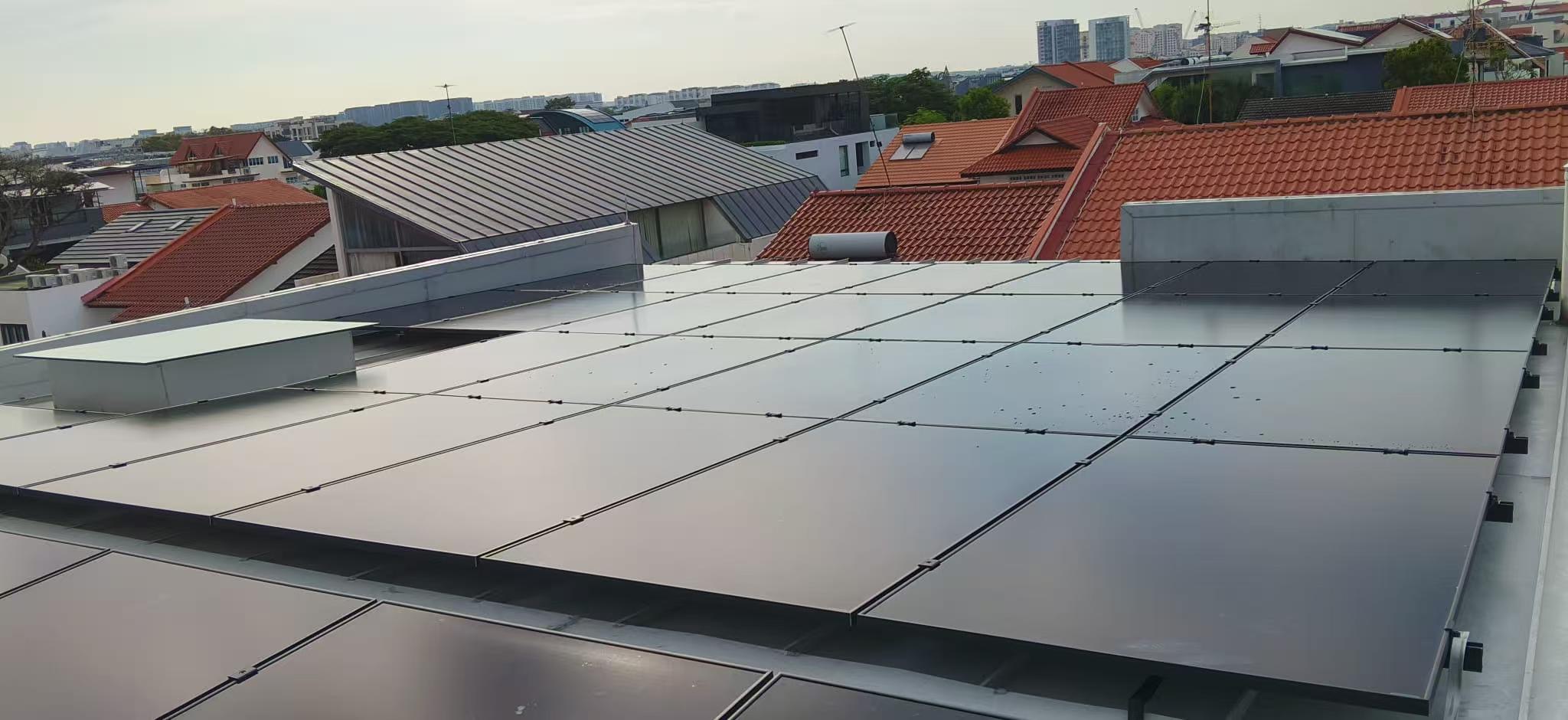
The quick answer: No, not by default. A standard grid-tied solar system switches itself off the moment the grid goes down, even in bright sunshine, because of a mandatory safety feature called anti-islanding. It protects SP Group’s line workers from a home accidentally feeding electricity back into lines they believe are dead. To keep the lights on during an outage, you need a battery (an Energy Storage System) with backup capability, paired with a hybrid inverter, not solar panels alone. It’s one of the most common misconceptions we hear from homeowners, and worth knowing before, not after, the next blackout.
Why does my solar system switch off during a power cut?
It feels counterintuitive: the sun is out, your panels are generating, and yet the house goes dark along with the rest of the street. This isn’t a fault. It’s a deliberate, required safety behaviour called anti-islanding protection, built into every grid-tied inverter sold and installed in Singapore.
When SP Group’s grid goes down, whether from a fault, storm damage, or planned maintenance, every solar inverter connected to that section of the grid detects the loss of grid signal and shuts down automatically, almost instantly. It stays off until grid power is confirmed stable again.
What is anti-islanding, and why does it matter?
“Islanding” is what happens when a home or building keeps generating electricity into a grid that utility workers believe is switched off. Without anti-islanding protection, a solar system could keep a section of “dead” line energised, which is a serious hazard for the SP Group crew repairing it. Anti-islanding is required under Singapore’s grid-connection rules, aligned with international standards such as IEEE 1547 and SS 555, precisely to prevent this.
So the shutdown isn’t a design flaw. It’s the system doing exactly what it’s supposed to do, for the safety of the people fixing the fault. Every properly installed grid-tied system in Singapore behaves this way, regardless of brand or installer.
So does having solar do nothing for me during a blackout?
On its own, a standard grid-tied system, the kind most Singapore landed homes have, does nothing for you during the outage itself. It resumes normal operation automatically once the grid comes back, but for the duration of the cut, your home has no power from the panels or the grid.
This is the detail that catches people out. Solar panels reduce your electricity bill every day the sun is up, but by themselves they are not a backup power source. If backup power matters to you, specifically, it takes a battery.
How do you actually get backup power from solar?
Backup power requires three things working together, not just extra panels:
- A battery (Energy Storage System). This stores energy so it’s available even when the grid, and for safety your panels, are offline.
- A hybrid inverter with islanding capability. Unlike a standard grid-tied inverter, a hybrid inverter can disconnect your home from the grid and create a self-contained “island” of power, drawing from the battery, while keeping that island safely isolated from the wider grid.
- A backup or critical-loads circuit. Most residential backup setups don’t try to power the whole house; they route a defined set of circuits, lights, fans, the fridge, Wi-Fi, perhaps one air-conditioner, through the battery during an outage.
Set up this way, when the grid drops, the hybrid inverter switches your home to “island mode” almost instantly, and your battery, topped up by the panels during the day, takes over those circuits. When the grid returns, the system reconnects and resumes normal operation automatically.
Standard solar vs backup-capable solar, side by side
During normal operation. Both power your home, export the surplus, and reduce your bill. A battery system also charges the battery with any surplus.
During a grid outage. A standard grid-tied system shuts off completely under anti-islanding, so there is no power from the panels or the grid. A battery system lets the hybrid inverter isolate the home and power the backup circuits from the battery.
What is actually protected. Nothing, on a standard system. On a battery system, whatever circuits are wired into the backup panel, typically lights, the fridge, Wi-Fi, fans, and sometimes one air-conditioner.
Resuming after the outage. Both resume automatically once grid power is confirmed stable.
Cost. A standard system is lower: panels, a standard inverter, and mounting. A backup-capable system costs more, adding the battery, the hybrid inverter, and the backup circuit wiring.
Can I add battery backup to a solar system I already have?
In most cases, yes. Battery backup is usually retrofittable to an existing grid-tied system, though the exact path depends on your current inverter. Some standard inverters can be paired with a compatible battery and a separate backup device; in other cases, the cleanest approach is to replace the existing inverter with a hybrid unit when it’s due for its routine replacement anyway (inverters typically last 5 to 10 years, as covered in our maintenance guide). Either way, it’s not a reason to delay solar until you’ve decided on backup. Size the panels for your roof and consumption now, and treat backup as a separate decision you can make later, or from day one if it’s already a priority.
What can a home battery actually power during an outage?
It depends on the battery’s usable capacity, but as a guide, a typical 7 kWh or 14 kWh residential battery can comfortably carry the essentials, lights, fans, the fridge, the Wi-Fi router, and phone charging, for many hours, and a 14 kWh unit can often cover a full day if you’re careful with usage. It recharges from your panels the next morning. Running higher-draw appliances such as multiple air-conditioning units, an oven, or a water heater will drain it much faster, so the honest approach is to size the battery to the loads you actually want protected, not your whole household’s normal draw.
What does backup-capable solar cost in Singapore?
A backup-capable setup costs more than a standard grid-tied system, because it needs the battery, the hybrid inverter, and the backup circuit wiring, not just panels and a standard inverter. As a guide, a residential battery of 7 kWh or 14 kWh usable capacity typically runs S$15,000 to S$25,000 installed, depending on brand, capacity, and whether backup wiring is included. If you’re adding this to an existing solar-only system, the site assessment will confirm whether your current inverter needs to be swapped for a hybrid unit or can be paired with a separate backup device.
Is a battery the only way to get backup power? What about a generator?
A generator is the other common option, and for some homes it’s a reasonable one, particularly if backup is the main priority and solar economics are secondary. The trade-offs are different:
Start-up. A battery with a hybrid inverter switches over automatically and near-instantly. A generator is started manually, or automatically if you add a transfer switch, which costs more.
Noise and emissions. A battery is silent and produces no emissions. A generator is noisy, produces exhaust fumes, and needs outdoor siting away from windows.
Fuel. A battery needs none and recharges from solar and the grid. A generator needs stored petrol or diesel, which degrades over time.
Everyday value. A battery also stores surplus solar for evening self-consumption. A generator does nothing until an outage happens.
Runtime. A battery is limited by its capacity, typically hours. A generator is limited mainly by the fuel you have on hand.
Upfront cost. A battery setup costs more. A basic generator is often cheaper, before installation and transfer-switch wiring.
Which makes more sense depends on how often outages actually concern you, how long a runtime you want, and whether you’d rather the system earn its keep every sunny day rather than sit idle until an emergency.
Does adding a battery for backup change my solar payback?
A battery bought purely for backup is not primarily an ROI decision, and it’s worth being upfront about that. Because Singapore’s residential electricity tariff is flat (no cheap off-peak window to exploit), a battery’s savings from shifting solar into self-consumption are modest on their own. Backup power is a resilience and peace-of-mind purchase, not a way to shorten your solar payback. Our solar batteries guide walks through the full economics, including the cases (EV charging, heavy evening use, future tariff changes) where a battery does pay for itself faster.
What about SCDF requirements for a backup battery?
Any home battery large enough to fall under SCDF’s Fire Code 2023 thresholds, in practice this generally means batteries above 20 kWh, triggers specific fire-safety requirements: a battery management system that can isolate the battery if it detects a fault, an accessible emergency shut-off, defined clearances from the roof edge, and correct siting relative to fire engine access. Most residential backup batteries sit at or below this threshold, but your installer designs and documents the system to the applicable requirements either way. This is covered in more detail in our solar approvals guide.
How reliable is Singapore’s grid anyway?
Very reliable. Singapore’s grid is among the most dependable in the world, and outages are uncommon. That’s exactly why we don’t recommend a backup battery on fear of frequent blackouts, it isn’t a realistic risk for most homes. The honest reasons to add one are the ones covered above: genuine peace of mind for the rare event, pairing with an EV or heavy evening usage, or positioning ahead of any future change to how electricity is priced.
Frequently asked questions
Does solar work during a power outage in Singapore?
Not by default. A standard grid-tied solar system automatically shuts off when the grid goes down, a required safety feature called anti-islanding, so your panels generate no usable power for your home during the outage, even in full sun.
Why do solar panels turn off during a blackout?
For safety. If a solar system kept generating into a “dead” grid line, it could injure SP Group’s line workers who believe the line is de-energised while repairing a fault. Anti-islanding protection detects the grid loss and shuts the inverter down almost instantly.
Do I need a battery to have power during an outage?
Yes. A battery (Energy Storage System) paired with a hybrid inverter that supports islanding is what lets your home run on stored solar power during a blackout. Panels alone, without a battery, provide no backup.
What can a home battery power during a power cut?
A typical 7 kWh or 14 kWh residential battery can run essential loads, lights, fans, the fridge, Wi-Fi, and phone charging, for many hours, and a 14 kWh unit can often cover a full day with careful use. Heavier loads like multiple air-conditioners drain it faster.
Is a backup battery worth it just for peace of mind during outages?
That’s a reasonable reason to buy one, but it’s a resilience decision rather than a savings decision. Singapore’s flat electricity tariff means a battery’s bill savings are modest on their own; the case for backup rests on how much you value continuity during the rare outage, not on payback.
Thinking about backup power for your home?
If an outage would genuinely disrupt your household, whether that’s medical equipment, a home office, or just wanting the fridge to keep running, it’s worth talking through what a properly designed backup setup looks like for your specific home and which circuits actually matter to you. No pressure, just the honest picture of what it takes and what it costs. Book a free site assessment and we’ll map it out for your address.
Rezeca Renewables has installed solar for landed homes and businesses across Singapore since 2009, with over 1,500 installations and 45+ MWp to date, including 1,300+ residential landed homes.
Considering solar for your Singapore home?
Rezeca offers a free on-site assessment, no-obligation quotes, and full 25-year ROI projections based on your actual property. Own your system outright or finance it through UOB U-Solar, backed by 17 years of experience and 1,300+ landed-home installations.
Estimate your savingsWhatsApp:+65 9839 9044 | Email:enquiry@rezeca.com

All your solar questions, answered
Everything Singapore landed homeowners need to know about solar panel installation, costs, approvals, and returns.
Get Your Custom
Solar Plan
Prefer to chat? Tap the WhatsApp icon below to reach our team instantly.