Solar Batteries in Singapore: When They Make Sense (Backup) vs When They Don't (ROI)
Do solar batteries pay off in Singapore? For most landed homes, not on ROI alone. Here is the honest maths, and the real reasons (backup, EV, future tariffs) a battery can still be worth it.
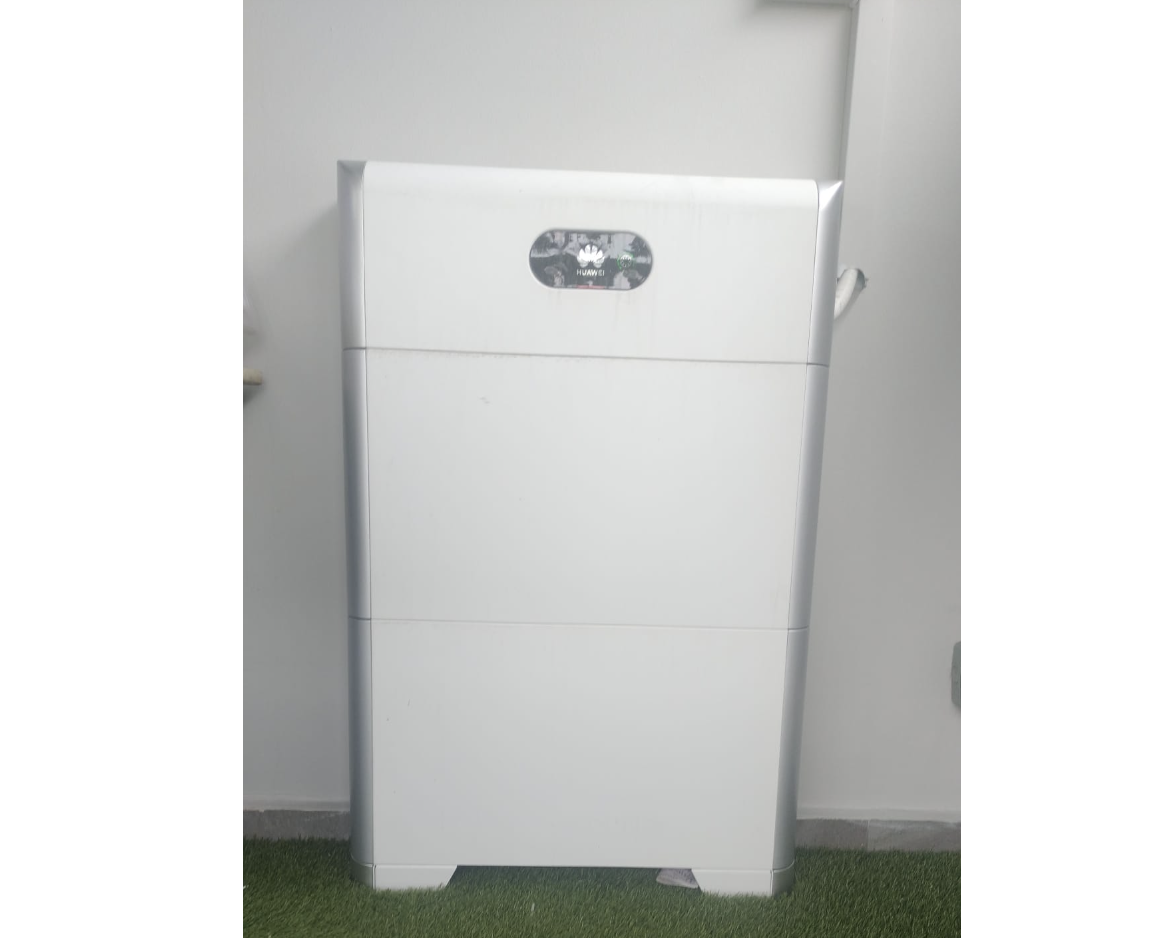
The quick answer: For most Singapore landed homes in 2026, a solar battery does not pay for itself on savings alone. Singapore has flat residential electricity tariffs, so there is no cheap off-peak window to store and shift, which is exactly what makes batteries profitable in other countries. A home battery of 7 kWh or 14 kWh costs around S$15,000 to S$25,000 installed and trims roughly S$140 to S$280 a year off your bill, a simple payback measured in decades. A battery still makes sense for reasons that are not about ROI: backup power during an outage, pairing with an EV or heavy evening use, a home that cannot export surplus solar to the grid, or positioning for future time-of-use tariffs. Buy a battery for resilience and independence, not to save money.
Why a battery rarely improves your ROI in Singapore
In countries with time-of-use pricing, a home battery earns its keep by charging when electricity is cheap (or free, from your own panels at midday) and discharging during expensive evening peaks. The bigger the gap between cheap and expensive hours, the faster the battery pays back.
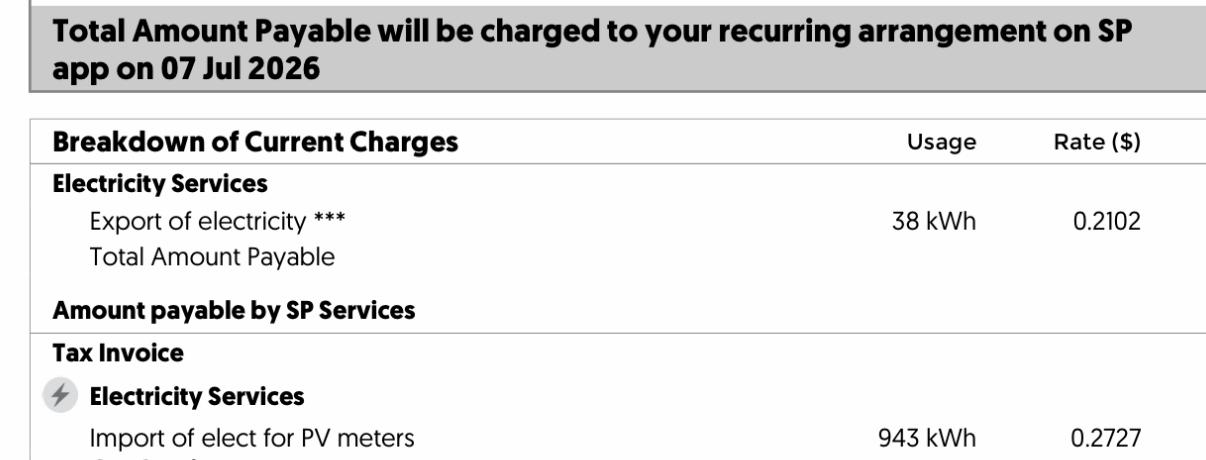
Singapore does not work that way for homes. Residential electricity is billed at a flat regulated tariff, the same rate at 2pm and 8pm. That removes the single biggest source of battery savings before you start. What a battery can still do is let you self-consume solar you would otherwise export to the grid. But under the Simplified Credit Treatment (SCT) scheme, exported solar is already credited at around 22 cents per kWh, while importing from the grid costs roughly 31 cents. So each kilowatt-hour you shift from export then re-import to store then self-use saves only the difference, on the order of 9 cents per kWh, not the full retail rate. Allow for round-trip losses of roughly 10 per cent and the real figure is closer to 6 cents per kWh actually delivered back into the home. That thin margin is why the maths is hard.
The numbers, honestly
Rezeca supplies Huawei home batteries in two usable sizes, 7 kWh and 14 kWh. Here is a realistic picture for a landed home that already has solar and is considering adding storage:
| Item | Typical range |
|---|---|
| Usable battery capacity | 7 kWh or 14 kWh |
| Installed cost | S$15,000 to S$25,000 |
| Annual bill saving (self-consumption gain) | ~S$140 (7 kWh) to ~S$280 (14 kWh) |
| Best case saving (no losses, a full cycle every day) | ~S$230 to ~S$460 |
| Simple payback | Over 50 years, even on best case savings |
| Battery warranty | 5 years |
Figures assume an existing solar system, current flat residential tariffs, a 9 cent gap between import price and export credit, about 10 per cent round-trip loss and roughly 330 full cycles a year. Actual savings depend on your consumption pattern and how much surplus solar you generate.
The uncomfortable line in that table is the payback. Even on the most generous assumptions, no round-trip losses and a full cycle every single day of the year, a 14 kWh battery saves about S$460 a year against a cost near the top of that range. That is still more than fifty years, and many times the length of the battery's warranty. On savings alone, a battery bought today will not break even within its working life. That is not a reason no one should buy one. It is a reason to be clear about why you are buying it.
When a battery does make sense
1. Backup power. This is the most common genuine reason. Singapore's grid is highly reliable, but outages do happen, and some households simply want the peace of mind of riding through one. A battery with backup capability keeps your critical loads running when the grid is down, which a grid-tied solar system on its own cannot do (for safety, standard solar shuts off during an outage so it does not feed power back into lines workers may be repairing).
2. You have, or plan to add, an EV. An electric vehicle roughly doubles a typical home's electricity use, and much of that charging happens in the evening after the sun is down. A battery lets you bank midday solar and pour it into the car at night, lifting how much of your own generation you actually use. It shifts the economics meaningfully, though usually still short of full payback on the battery alone.
3. Heavy evening consumption. If your household is out all day and only comes alive after 7pm, most of your solar is exported while you are away and most of your usage lands after dark. A battery closes that gap and raises self-consumption, which is where the savings live.
4. Positioning for future tariffs. The Energy Market Authority has signalled interest in time-differentiated pricing for consumers over time. If flat tariffs ever give way to peak and off-peak rates, batteries become far more valuable overnight. Some homeowners install now to be ready; others prefer to wait until the pricing actually changes. Both are reasonable.
What backup power actually covers
Backup does not usually mean running your whole house as normal through a blackout. It means keeping critical loads going: lights, fans, the fridge, Wi-Fi and routers, phone charging, perhaps one air-conditioner. A 7 kWh battery can carry those essentials for several hours and a 14 kWh battery for most of a night, sometimes longer if you are careful, and both recharge from your panels the next morning. Running high-draw appliances like multiple aircon units, an oven, or a water heater will drain either far faster. When backup is your goal, size the battery to the loads you actually want to protect, not to your total consumption.
What about cluster houses and condominiums with their own roof?
Some cluster houses and condominium units have their own usable roof but sit on an electricity supply where exporting surplus solar to the grid is not permitted. This is the one case where the battery maths genuinely improves. Without the Simplified Credit Treatment export credit, any solar you generate but do not use on the spot is simply lost, so every kilowatt-hour the battery stores is worth the full import price of around 31 cents rather than a 9 cent gap. That brings simple payback down to around 15 years, which is a different conversation from the fifty-plus years facing a home that can export.
The usual reason is a master-sub metering arrangement, found in condominiums and some cluster housing developments. The development holds one master electricity account with SP Group, and each home sits behind it as a sub-account. According to SP Group’s guidance on solar in master-sub buildings, its systems cannot register solar exports from a sub-account, so the solar you generate must not exceed your own consumption, and SP Group will not pay for any surplus. The only route to being paid is a private power purchase agreement with whoever uses that electricity, such as your management corporation (MCST).
Not every cluster house is on master-sub metering, so confirm before you size a system. Contact SP Group with your full address and postal code and ask: “Is my electricity account a direct account, or part of a master-sub arrangement?” If it is direct, you can export surplus solar for credits like any other landed home, and the battery maths in the rest of this guide applies.
A 14 kWh battery is the usual choice here, enough to carry a household's essential evening loads on stored daytime solar. It is still as much an energy independence decision as a financial one, because the payback still runs long and depends on your roof actually producing enough surplus to fill the battery most days. But for a home that cannot export, storage stops being a luxury and starts being the only way to use what your panels make.
Adding a battery to an existing solar system: the inverter question
This is now the most common battery question we get from landed homeowners who already have solar, and the answer is less simple than "yes, you can retrofit".
A battery does not connect to a standard grid-tied solar inverter. It needs a hybrid inverter (sometimes called storage-ready or battery-ready), which manages three flows at once: solar coming in, the battery charging and discharging, and the grid. In most cases the battery and the hybrid inverter also have to come from the same manufacturer's ecosystem, so a Huawei battery pairs with a Huawei hybrid inverter.
That puts your home in one of three situations:
- Your existing inverter is already a compatible hybrid. The battery is a straightforward add-on. This is the cheapest path, and the one most people assume they are on.
- Your inverter is hybrid-capable but a different brand or model. Compatibility has to be checked case by case. Sometimes an AC-coupled battery, which sits alongside the existing system with its own inverter, is the cleaner answer.
- Your inverter is a standard grid-tied string inverter. Most residential systems installed in Singapore before storage became a common question fall here. The inverter has to be replaced with a hybrid one, which adds cost and means an inverter that may still be under warranty comes off the wall early.
None of this makes a retrofit a bad idea. It does mean the honest first step is checking what is already on your wall, not choosing a battery. Send us a photo of your inverter's label and we can usually tell you which of the three situations you are in before anyone visits.
Specs to look for
If you decide a battery is right for you, compare on these, not just the sticker price:
- Usable capacity (kWh): the energy you can actually draw, which is less than the nameplate figure. This is the number that matters for backup duration.
- Round-trip efficiency: how much energy you get back out versus what you put in. Look for around 90% or better; lower efficiency quietly eats your savings.
- Depth of discharge and cycle warranty: how much of the battery you can use each cycle, and how many cycles (or years) the warranty covers before capacity is expected to fall. More cycles at a higher retained capacity is better.
- Hybrid inverter compatibility: confirm the battery works with the inverter you have, or budget for the one you will need. See the section above.
- Backup capability: confirm the battery and inverter setup actually supports islanding (running your home when the grid is down). Not every solar battery is wired for it.
- Safety and SCDF compliance: a home battery is an Energy Storage System, and it must meet SCDF Fire Code 2023 requirements, including a battery management system, an accessible emergency shut-off, and correct siting. Your installer handles this as part of the design (see our approvals guide).
Solar first, battery later?
For most landed homes, the strongest move is to size the solar system well first, since panels have a clear payback of 3 to 6 years in Singapore, and treat the battery as a separate, later decision driven by whether you want backup, are adding an EV, or expect tariffs to change. Batteries can be retrofitted to an existing solar system, so waiting rarely closes the door, but as above it is not always free: unless your inverter is already a compatible hybrid, a retrofit means changing it. If backup matters to you from day one, it is cleaner to plan the battery into the design from the start so the inverter and wiring are specified for it, which avoids paying for an inverter twice.
Frequently asked questions
Are solar batteries worth it in Singapore?
On savings alone, usually not. Because residential tariffs are flat, a 7 to 14 kWh battery saves only around S$140 to S$280 a year against a S$15,000 to S$25,000 cost, a simple payback of over 50 years even on generous assumptions. Batteries are worth it for backup power, pairing with an EV or heavy evening use, homes that cannot export surplus solar, or to prepare for possible future time-of-use tariffs.
How much does a home solar battery cost in Singapore?
Rezeca supplies Huawei home batteries in 7 kWh and 14 kWh usable capacities, costing around S$15,000 to S$25,000 installed depending on size, whether backup wiring is included, and whether your existing inverter needs to be replaced with a hybrid one.
Will a solar battery keep my house running during a power cut?
Yes, if it is set up for backup. It will run critical loads such as lights, fans, the fridge, Wi-Fi and phone charging, and can recharge from your panels the next day. A standard grid-tied solar system without a battery shuts off during an outage for safety and cannot power your home on its own.
Why don't batteries save more money in Singapore?
Singapore homes pay a flat electricity tariff with no cheap off-peak window, so there is nothing to arbitrage. A battery only saves the gap between the export credit (around 22 cents per kWh) and the import price (around 31 cents), roughly 9 cents per kWh of stored solar, and closer to 6 cents once round-trip losses are counted. That is too small to pay back the hardware quickly.
Do I need to change my inverter to add a battery to my existing solar system?
Often, yes. A battery needs a hybrid inverter, which manages solar, battery and grid together, and it usually has to match the battery's manufacturer. If your home has a standard grid-tied string inverter, which most Singapore residential systems installed before storage became common do, it will need to be replaced, or the battery will need to be AC-coupled with its own inverter. Both add cost. Send us a photo of your inverter's label and we can tell you which applies before any site visit.
Do batteries make sense for cluster houses or condominiums that cannot export to the grid?
This is the one case where the maths genuinely improves. Without an export credit, any unused daytime solar is simply lost, so every kilowatt-hour the battery stores is worth the full import price of around 31 cents rather than a 9 cent gap. That brings simple payback down to around 15 years, and a 14 kWh battery can hold a household's essential evening loads. It is still as much a resilience and independence choice as a financial one, but it is a far better case than for a home that can export.
Can I add a battery to my existing solar system later?
In most cases yes, and it is one of the most common enquiries we now get from landed homeowners who already have solar. The battery itself retrofits fine. The question is your inverter: unless it is already a compatible hybrid, it will need replacing, or the battery will need to be AC-coupled. If backup is a day-one priority on a new system, plan it into the original design so you do not pay for an inverter twice.
Not sure a battery is right for your home?
Whether a battery earns its place depends entirely on how you use electricity and what you want it to do. We are happy to model your consumption and show you honestly what a battery would and would not do for your home, no pressure, just the real numbers.
Rezeca Renewables has installed solar for landed homes and businesses across Singapore since 2009, with over 1,500 installations and 45+ MWp to date, including 1,300+ residential landed homes.
Considering solar for your Singapore home?
Rezeca offers a free on-site assessment, no-obligation quotes, and full 25-year ROI projections based on your actual property. Own your system outright or finance it through UOB U-Solar, backed by 17 years of experience and 1,300+ landed-home installations.
Estimate your savingsWhatsApp:+65 9839 9044 | Email:enquiry@rezeca.com

Get Your Custom
Solar Plan
Prefer to chat? Tap the WhatsApp icon below to reach our team instantly.