Case Study: 57.33 kWp Solar on a Holland-Area GCB
A 57.33 kWp rooftop solar installation on a Good Class Bungalow in the Holland area (District 10), commissioned in 2026, using 126 Trina 455 Wp panels on a metal roof. What a GCB-scale system looks like, and what it can generate.
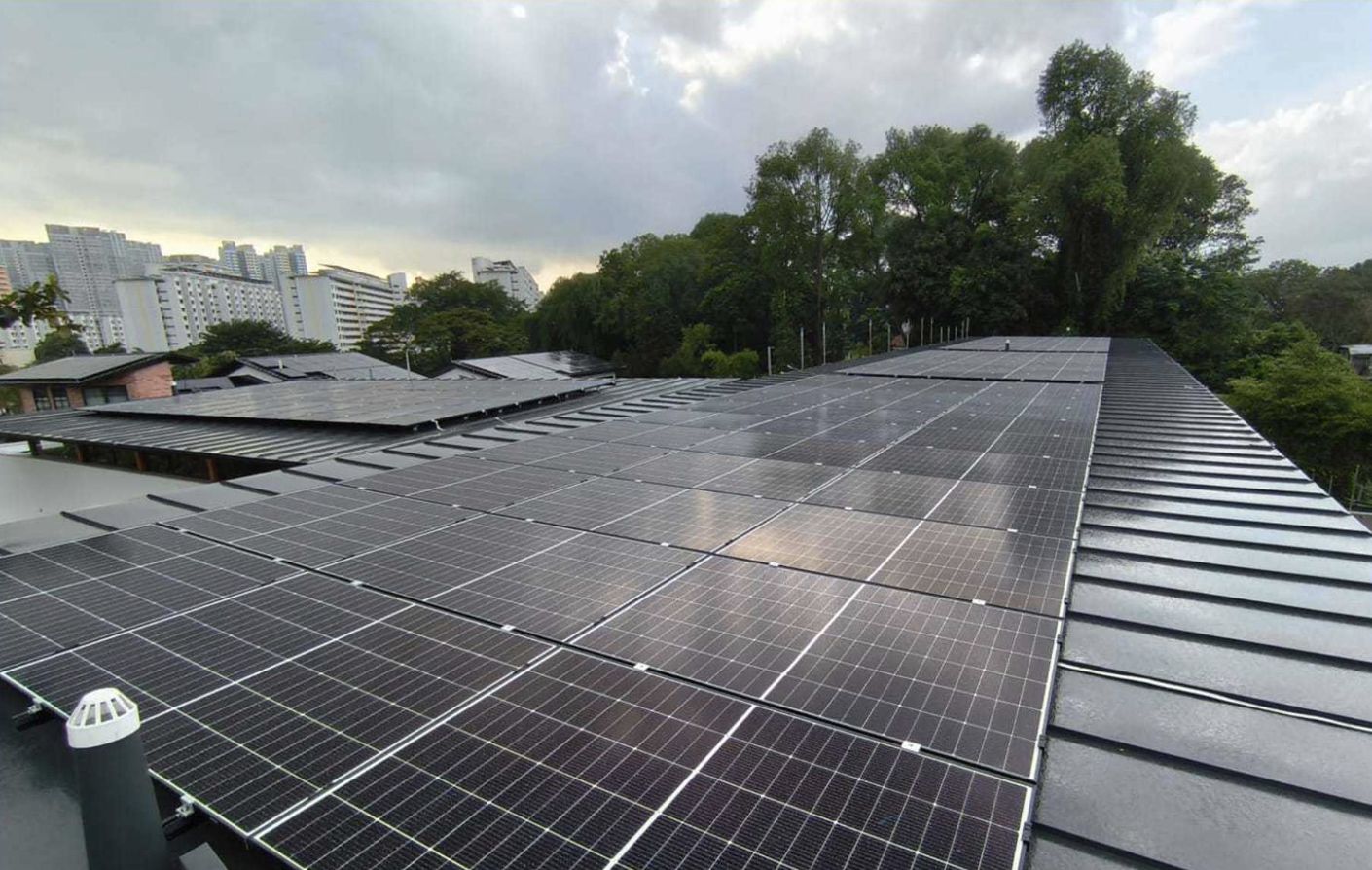
Project snapshot: A 57.33 kWp rooftop solar system on a Good Class Bungalow off Holland Road (District 10), commissioned in 2026. The array uses 126 Trina Solar 455 Wp panels on a metal roof. A system this size generates an estimated 63,000 to 77,000 kWh a year in Singapore conditions.
A Good Class Bungalow built for solar
Good Class Bungalows are among the most suitable homes in Singapore for rooftop solar, and this Holland-area property is a clear example. GCBs sit on plots of at least 1,400 square metres, which usually means a large, largely unshaded roof and the kind of daytime electricity demand, from air-conditioning to pool pumps, that solar offsets well. This home sits in one of District 10's established Good Class Bungalow neighbourhoods, off Holland Road and a short walk from Holland Village.
Rezeca Renewables has installed solar for landed homes across Singapore since 2009, including many in the Holland, Tanglin and Bukit Timah area. You can see more of our work in this part of the island on our Tanglin, Holland and Bukit Timah district page.
System at a glance
| System capacity | 57.33 kWp |
| Panels | 126 x Trina Solar 455 Wp |
| Roof type | Metal |
| Estimated annual generation | ~63,000 to 77,000 kWh |
| Location | Holland area (off Holland Road), District 10 |
| Commissioned | 2026 |
Generation is an estimate based on the standard yield rule of thumb (1,100 to 1,350 kWh per kWp per year), not this home's metered output.
What a 57 kWp system generates
In Singapore, a well-oriented, largely unshaded rooftop solar system generates roughly 1,100 to 1,350 kWh per kWp each year, depending on shading, orientation and the year's weather. For a 57.33 kWp system, that works out to an estimated 63,000 to 77,000 kWh a year. These are illustrative estimates based on system size, not this home's metered output, and they represent several times the annual electricity use of a typical landed home. For how system size is worked out from roof, consumption and budget, see our guide on how many solar panels a landed home needs.
Designing for a metal-roof GCB
A roof this size gives a solar engineer room to prioritise both output and appearance. The array uses 126 Trina Solar 455 Wp monocrystalline panels, laid out for a clean, uniform finish that suits the look of a Good Class Bungalow. On a metal roof, panels are typically secured with non-penetrating clamps fixed to the roof's seams or profile, which protects the roof's waterproofing and makes for a clean, quick installation. Panels are arranged to follow the roof planes and keep clean sightlines, while each string is matched for orientation and shading. Where perimeter trees or roof features cast partial shade, module-level electronics such as optimisers help each panel perform independently.
What it means for savings and payback
Solar benefit combines purchases avoided with separate export proceeds. SCT is for eligible consumers buying electricity at SP Group’s regulated tariff. Eligible consumers buying from a retailer may use ECIS, with market-linked export prices. The distinction is based on the electricity purchase arrangement and eligibility, not simply the property type or system size. S$0.22/kWh is a rounded Q4 2026 SCT illustration, not a guaranteed payment or an ECIS rate. The 63,000 to 77,000 kWh annual generation range previously reported for this project is a design estimate, not a measured Q4 2026 result. The calculator instead uses a generic reference yield of 1,100 kWh/kWp; actual project yield and on-site use require project data. Typical payback for a Singapore landed home is 3 to 6 years, based on AIKO panels with a 30-year warranty. Your own payback depends on installed cost, roof yield, shading, how much power you use on site and your import and export rates. Use the calculator for an estimate and get a roof and usage assessment. Related reading: 2026 solar cost guide · honest ROI breakdown
Approvals and installation
For a landed home, the solar application to SP Group is handled by a Licensed Electrical Worker, and is a notification process rather than an EMA licence. Larger systems like this one may involve additional structural and grid checks. Rezeca manages the paperwork end to end, and a typical residential installation is completed within one to two weeks on site once approvals are in place.
Frequently asked questions
How big a solar system can a Good Class Bungalow in Singapore fit?
It depends on usable roof area, but GCB roofs are large, so systems commonly range from about 30 to 120 kWp. This Holland-area Good Class Bungalow took a 57.33 kWp system, 126 Trina Solar 455 Wp panels on a metal roof, commissioned in 2026.
How much electricity does a 57 kWp solar system generate in Singapore?
Roughly 63,000 to 77,000 kWh a year, based on Singapore's typical yield of about 1,100 to 1,350 kWh per kWp. Actual output depends on roof orientation, shading, and the year's weather.
Can solar panels be installed on a metal roof?
Yes. Metal roofs are well suited to solar. Panels are usually fixed with non-penetrating clamps that grip the roof's seams or profile, which preserves the roof's waterproofing and makes for a clean, quick installation.
Is solar worth it for a large landed home or Good Class Bungalow? A large usable roof can support solar, but financial suitability depends on the actual quote, generation and load profile. Typical payback for a Singapore landed home is 3 to 6 years, based on AIKO panels with a 30-year warranty. Your own payback depends on installed cost, roof yield, shading, how much power you use on site and your import and export rates. Use the calculator for an estimate and get a roof and usage assessment. Solar may continue reducing electricity purchases and earning export proceeds after the initial cost is recovered. Those benefits are not cost-free profit: degradation, maintenance, inverter replacement and future tariffs affect the result. Warranty length does not establish system payback or eliminate running costs.
Do solar panels look good on a Good Class Bungalow?
Modern monocrystalline panels have a low-profile, uniform appearance, and on a large roof they can be arranged to follow the roof planes and keep clean sightlines, which suits the look of a Good Class Bungalow.
What approvals are needed to install solar on a landed home in Singapore?
For a landed home, a Licensed Electrical Worker submits the application to SP Group, which is a notification process rather than an EMA licence. Larger systems may involve additional structural and grid checks, and Rezeca manages the paperwork end to end.
Thinking about solar for a large landed home?
Every roof is different, and the right system size comes from looking at yours. We are happy to walk you through what your roof could support and what it could generate. No pressure, just the numbers for your home.
Rezeca Renewables has installed solar for landed homes and businesses across Singapore since 2009, 1,500+ installations and 45+ MWp to date, including 1,300+ residential landed homes.
Assumptions and limits
Q4 2026 illustration, checked 18 October 2026: SP regulated household import at S$0.3116/kWh including GST, effective 1 October to 31 December; rounded SCT export illustration of S$0.22/kWh for eligible regulated-tariff customers; reference yield of 1,100 kWh/kWp a year; 70% on-site use with sufficient household demand; and indicative installed cost of S$1,200 to S$2,000/kWp, using S$1,600/kWp for midpoint payback. These are the calculator assumptions, not a quotation, measured project result or guaranteed return. Retailer / ECIS customers must use their applicable import and export assumptions. Simple payback divides initial installed cost by first-year avoided electricity purchases plus export proceeds. It excludes future operating costs. Long-term illustrations hold tariffs and output constant and exclude degradation, maintenance, inverter replacement, finance, RECs and discounting. A panel warranty is separate from these costs.
Adjust the calculator assumptions · SP Group tariff · EMA solar payment schemes
Considering solar for your Singapore home?
Rezeca offers a free on-site assessment, no-obligation quotes, and full 30-year ROI projections based on your actual property. Own your system outright or finance it through UOB U-Solar, backed by 17 years of experience and 1,300+ landed-home installations.
Estimate your savingsWhatsApp:+65 9839 9044 | Email:enquiry@rezeca.com


Get Your Custom
Solar Plan
Prefer to chat? Tap the WhatsApp icon below to reach our team instantly.