How Long Do Solar Panels Last in Singapore? Lifespan, Degradation and End of Life
A panel at year 25 is usually still producing close to nine-tenths of what it did when new. The honest picture on lifespan, degradation, what actually fails first, and Singapore's free take-back scheme for old panels.
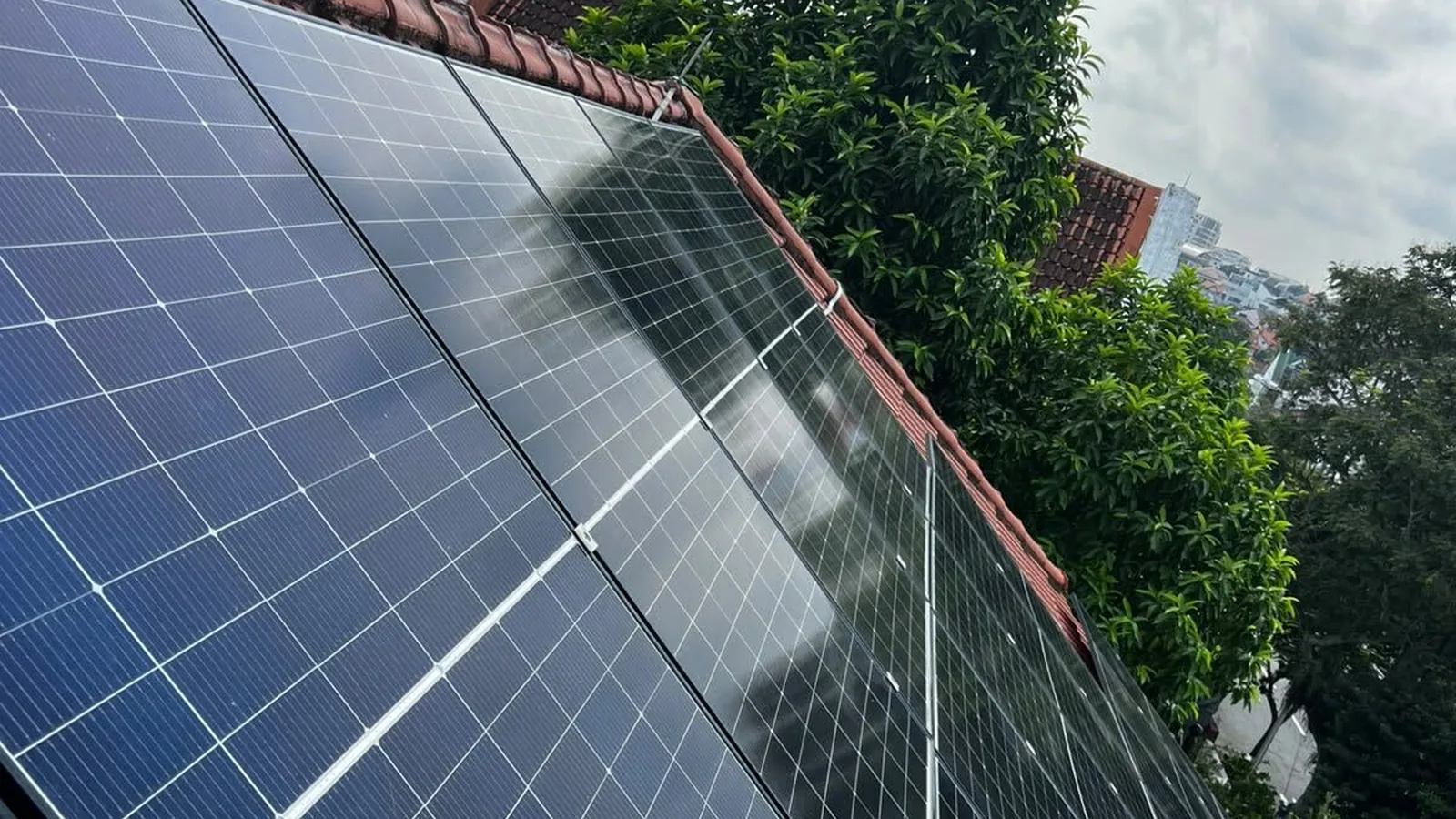
The quick answer: Solar panels installed on a Singapore landed home are built to last 25 to 30 years, and most keep working past that. They don’t stop one day; they fade slowly, typically losing around 0.3 to 0.5 percent of their output a year, so a panel at year 25 is usually still producing somewhere near 85 to 92 percent of what it did when new. The part you should expect to replace is the inverter, not the panels. And when the array eventually does reach end of life, the decision most owners face is an upgrade rather than a write-off, because the roof layout, cabling and grid connection are already there and newer panels fit more capacity into the same space. The old panels are regulated e-waste in Singapore: the supplier must take them back free of charge for recycling, while taking them down from the roof is a normal, quoted job.
What does a “25-year lifespan” actually mean?
It is one of the most common questions Rezeca hears at a site assessment, and the honest answer is that “25 years” is shorthand for two different promises that often get blurred together on a quotation.
The first is the product warranty, which covers the panel against manufacturing defects, delamination, frame corrosion, junction box failure and similar physical problems. Most quality panels sold for Singapore homes today carry 25 or 30 years, though some budget lines still offer 12 to 15, so it is worth checking the datasheet rather than the brochure.
The second is the performance warranty, the manufacturer’s guarantee about how much electricity the panel will still make years from now. A typical modern datasheet guarantees something in the region of 87 to 92 percent of rated output at year 25, with a stated maximum annual degradation rate along the way.
Neither is a switch-off date. A panel that reaches its warranted floor at year 25 is not finished, it is simply outside the window in which the manufacturer will replace it for underperformance, and many first-generation systems worldwide are still generating usefully past 30 years. What matters for your decision is not when the panel dies, it’s how much electricity it makes in the years you own the house.
How fast do solar panels actually lose output?
Panels degrade in a fairly predictable way. There is a small initial settling in the first year, usually around 1 to 2 percent, and then a slow, near-linear decline for the rest of the panel’s life.
Current N-type panels, the TOPCon and heterojunction cell types now standard on quality residential systems, are typically rated at 0.3 to 0.5 percent a year on their datasheets. Older P-type PERC panels, which is what many Singapore systems installed before roughly 2022 use, generally sit a little higher, around 0.5 to 0.6 percent a year. That difference sounds trivial in any single year and compounds into something worth knowing over 25.
Here is what that looks like for a 10 kWp landed home system producing roughly 12,000 kWh in its first full year, using a mid-range 0.4 percent annual degradation figure compounding from year 1, after the initial settling has already happened:
| Year | Approximate output retained | Annual generation (10 kWp system) |
|---|---|---|
| Year 1 | 100% | about 12,000 kWh |
| Year 5 | about 98% | about 11,800 kWh |
| Year 10 | about 96% | about 11,600 kWh |
| Year 20 | about 93% | about 11,100 kWh |
| Year 25 | about 91% | about 10,900 kWh |
| Year 30 | about 89% | about 10,700 kWh |
These are illustrative figures based on published datasheet degradation rates, not a Rezeca guarantee, and your own numbers depend on the panel model, the roof, and how well the system is looked after. But the shape of the curve is the point: a system installed today is still doing about nine-tenths of its job in the mid-2050s.
Set that against your payback. Most Singapore landed home systems pay for themselves in 3 to 6 years. Everything after that is return, and the table shows how gently it tapers. Rezeca’s payback period guide works through the full 25-year view.
Does Singapore’s heat shorten a panel’s life?
Two separate effects get confused here, and the distinction is worth getting right.
Heat reduces output on the day. Every panel has a temperature coefficient, so a hot roof at 2pm produces less than the same panel would at laboratory test temperature. That reverses as soon as the panel cools, and good design (ventilated mounting gaps, correct inverter sizing) manages it. Rezeca’s guides on heat and panel efficiency and cloudy and rainy days cover it in detail.
Degradation is permanent, and heat contributes to it. Sustained high operating temperature and humidity do accelerate the slow ageing of a panel: encapsulant yellowing, seal stress, corrosion at the frame and junction box. Singapore is a demanding environment on all three counts.
What protects a system is less exotic than people expect. It is specification and workmanship: panels certified to IEC standards including damp-heat testing, marine-grade aluminium and stainless steel mounting hardware rather than mild steel, correctly rated UV-resistant DC cabling, sealed connectors, and enough airflow behind the array. Corrosion and connector failure account for more real-world Singapore problems than the cells themselves ever do.
What actually fails first? Almost never the panels
Across Rezeca’s installed base, the component that reaches end of life first is the inverter, not the panel.
Inverter warranty is 5 or 10 years depending on the model, and can usually be extended. Warranty length is not the same as service life, and inverters commonly run well past their warranty period. In practice, most Singapore residential systems need one inverter replacement somewhere between year 5 and year 15, depending on the unit, how well it is ventilated, and how hard it works. Over a 30-year system life, plan for one replacement and possibly two.
The other things that turn up in the field are almost all preventable: a loose or water-ingressed MC4 connector, a shaded or soiled panel dragging down its whole string, a blocked inverter ventilation grille, or bird droppings baked onto the glass. None of these are panel failures. They are maintenance items, and they are the reason a system that is checked annually can hold around 90 to 95 percent of its original output over 30 years, while a neglected one can drift noticeably lower. Rezeca’s maintenance guide sets out what an annual inspection covers and what it costs.
Why year-25 output matters more than it sounds
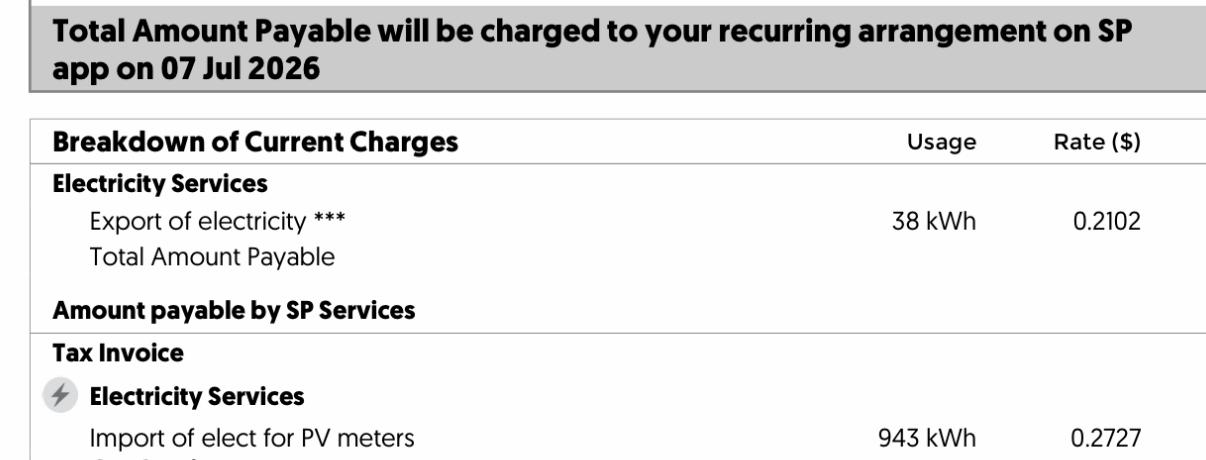
A little under 11,000 kWh a year, which is where that 10 kWp system sits at year 25, is not a consolation prize. It is close to what the system produced when it was new, and it is still displacing electricity you would otherwise buy from the grid, with the surplus credited to your SP utilities account: at the regulated tariff minus grid charges under the Simplified Credit Treatment if you buy electricity from SP Group, or at the half-hourly wholesale price if you are on a retailer plan.
What that output is worth in dollars depends entirely on the tariff at the time, and it would be dishonest to put a figure on 2051. What can be pointed to is the direction of travel so far. The regulated tariff has been moving up, including a 17 percent rise in a single quarter in July 2026. If electricity continues to get more expensive over the next 25 years, a slowly fading solar system quietly becomes more valuable each year, not less. Rezeca’s explainer on the July 2026 tariff rise and the honest ROI breakdown work through the numbers at today’s rates.
What happens at the end of the system’s life?
For most homeowners this turns out not to be a disposal question at all. It is an upgrade question.
By the time a system is 25 or 30 years old, the roof is still set up for solar, the cabling routes exist, the SP Group connection is in place, and the household has decades of consumption data behind it. Panel technology, meanwhile, will have moved on considerably. A panel rated 510 Wp in 2026 will have a far higher-output equivalent by then, so the same roof area can carry a noticeably larger system. Replacing an old array on a proven roof layout, sometimes called repowering, is usually a simpler job than the original installation, and it is the option most owners will want to look at first. It is also the natural moment to fold in whatever else has changed: battery storage, EV charging, a household that has changed shape.
The old panels then need to be dealt with properly, and it pays to know the position in advance. Solar PV panels are one of the five regulated product categories under Singapore’s Extended Producer Responsibility (EPR) scheme for e-waste, in force since 1 July 2021 under the Resource Sustainability Act. In practical terms:
- You cannot simply throw them out, and you shouldn’t want to. Panels contain recoverable aluminium, glass, silicon, copper and silver.
- They have to go to a licensed e-waste recycler. Singapore has licensed e-waste recyclers for PV panels, including an automated facility in Tuas that says it can recover as much as 96 percent of each panel, so the material goes back into use rather than to Semakau.
- Take-back of the panels is free. Getting them off the roof is not. Under the scheme, the companies that supply panels to the Singapore market must offer free take-back of the panels they supplied and send them to a licensed recycler. What that does not cover is the site work: isolating and decommissioning the system, dismantling the mounting, bringing the panels down without breaking them, and making good the roof. That labour is quoted like any other job, and it is better to know that now than to be surprised by it in 2050.
So the sustainability question that sometimes gets raised about solar, what happens to all these panels in 25 years, has a specific regulatory answer in Singapore rather than a hopeful one. Worth asking any installer how they handle it, before you need the answer.
Can you replace a single panel, or is it all or nothing?
Single panels can be replaced, and occasionally are, usually after physical damage rather than age. The catch is that panel models change quickly. A panel bought in 2026 will not be in production in 2040, so a replacement will be a different model with different electrical characteristics. That is manageable, but it needs someone who understands string matching, because a mismatched panel can drag down the whole string it sits in.
Which is the practical reason to keep your paperwork. The panel and inverter model numbers, the string layout, the commissioning report and the warranty certificates are what make a future repair straightforward, and what lets a different company pick the system up cleanly if your original installer is no longer contactable.
How to get the full 25 or 30 years out of your system
Five things do most of the work:
- Specify for the climate, not the price list. IEC-certified panels with damp-heat testing, marine-grade mounting hardware, properly rated cabling. Rezeca’s panel brand comparison covers what to look for on a datasheet.
- Get the roof work right the first time. Penetration waterproofing and mounting detail decide whether the array is still sound in year 20, and different roof types call for different approaches. See Rezeca’s roof type guide.
- Clean and inspect annually. Soiling and bird droppings are the largest avoidable loss in Singapore, and an annual electrical check catches faults while they are small.
- Watch your monitoring. A system quietly producing 15 percent below expectation looks completely normal from the driveway. The app is where you notice.
- Budget for the inverter. Treat one replacement as a planned cost of ownership, and use it as the moment to consider a hybrid unit if battery storage is on your horizon.
Where Rezeca fits
Rezeca Renewables has been installing solar in Singapore since 2009, 17 years and over 1,500 installations, which means the team now maintains systems it commissioned more than fifteen years ago and can see how they have actually aged in this climate rather than on a datasheet. That includes systems installed by companies no longer operating. Rezeca services those too, and homeowners in that position are a growing share of the maintenance calls the team takes. Rezeca’s maintenance service covers annual inspection, cleaning and inverter replacement for any system, whoever installed it.
Frequently asked questions
How long do solar panels last in Singapore?
Panels are built to last 25 to 30 years and commonly keep generating beyond that. Product warranties are 25 or 30 years depending on brand, and performance warranties typically guarantee around 87 to 92 percent of rated output at year 25. Panels rarely stop working outright; their output declines slowly.
What is the annual degradation rate of solar panels?
Modern N-type panels are typically rated at 0.3 to 0.5 percent output loss per year, after a settling drop of around 1 to 2 percent in the first year. Older P-type PERC panels sit around 0.5 to 0.6 percent. At 0.4 percent a year, a system retains roughly 91 percent of its year-1 output at year 25.
Does Singapore’s heat and humidity shorten solar panel life?
Heat reduces output on the day, which reverses as the panel cools, and sustained heat and humidity do modestly accelerate long-term ageing. The practical defences are specification and workmanship: IEC damp-heat certified panels, marine-grade mounting hardware, UV-rated cabling, and ventilation behind the array.
What fails first on a solar system, the panels or the inverter?
The inverter. Its warranty is 5 or 10 years depending on model and can be extended, but service life usually runs longer. Most Singapore residential systems need one inverter replacement between year 5 and year 15, and over a 30-year life owners should plan for one and possibly two. Panel failures are uncommon by comparison.
What happens to old solar panels in Singapore?
Solar PV panels are a regulated product category under Singapore’s Extended Producer Responsibility scheme for e-waste, in force since 1 July 2021, so they cannot be thrown out and must go to a licensed e-waste recycler. The companies that supply panels must offer free take-back of the panels themselves, but decommissioning the system and removing the array from the roof is site labour and is charged separately.
Can you replace old panels with newer ones on the same roof?
Yes, and for most owners that is the more useful question than disposal. The roof layout, cabling and grid connection are already in place, and panel output per square metre improves considerably over 25 years, so the same area usually carries a larger system. Replacing an array on a proven layout, sometimes called repowering, is generally simpler than the original installation, and it is a natural point to add battery storage or EV charging.
Thinking about the next 25 years, not just the next bill?
If you would like to see what your roof would produce in year 1, year 10 and year 25, along with what the ownership costs actually look like across that period, Rezeca is happy to walk you through it with no obligation. If you already have panels and want an honest read on how they are ageing, an inspection will tell you in an afternoon. Book a free site assessment.
Rezeca Renewables has installed solar for landed homes and businesses across Singapore since 2009, with over 1,500 installations and 45+ MWp to date, including 1,300+ residential landed homes.
Considering solar for your Singapore home?
Rezeca offers a free on-site assessment, no-obligation quotes, and full 25-year ROI projections based on your actual property. Own your system outright or finance it through UOB U-Solar, backed by 17 years of experience and 1,300+ landed-home installations.
Estimate your savingsWhatsApp:+65 9839 9044 | Email:enquiry@rezeca.com
All your solar questions, answered
Everything Singapore landed homeowners need to know about solar panel installation, costs, approvals, and returns.
Get Your Custom
Solar Plan
Prefer to chat? Tap the WhatsApp icon below to reach our team instantly.

Copyright © 2026 Rezeca Renewables.