Solar Performance in Singapore Heat: Temperature, Efficiency Loss, and What to Look For
Panels are tested at 25°C but reach 55 to 70°C on Singapore roofs. Every degree above 25°C reduces output.

Why heat matters more in Singapore than almost anywhere else
Solar panels are tested and rated under Standard Test Conditions (STC): 25°C cell temperature, clear irradiance, no wind. Those are laboratory conditions. On a real Singapore rooftop, panels sit in direct equatorial sun with high humidity and little cooling breeze, and cell temperatures climb to 55 to 70°C through the middle of the day, exactly when the sun is strongest.
This matters because solar cells lose efficiency as they heat up. The hotter the cell, the lower the voltage it produces, and the less electricity you harvest. In a temperate climate this is a minor footnote. In Singapore, where rooftop temperatures are high almost every day of the year, it is one of the most important and most overlooked factors in real-world solar performance.
Temperature coefficient: the number that actually matters
Every panel has a temperature coefficient of power, expressed as a percentage loss per degree Celsius above 25°C. The smaller this number, the better the panel holds up in heat.
Consider a rooftop where panels reach 60°C, which is 35°C above the rated 25°C:
- Standard PERC panel at -0.35%/°C: loses about 35 × 0.35% = 12.25% of its rated output.
- Premium panel (Aiko ABC or HJT) at -0.26%/°C: loses only about 35 × 0.26% = 9.1%.
That difference of roughly 3 percentage points may sound small, but it compounds across every sunny hour, every day, for 25 years. On a 10 kWp system in Singapore, the better temperature coefficient is worth more than S$2,700 in additional lifetime generation, often more once electricity tariffs rise over time.
How installation design affects heat (and yield)
Panel choice is only half the story. How the system is installed has a direct effect on how hot the panels get and how much you lose:
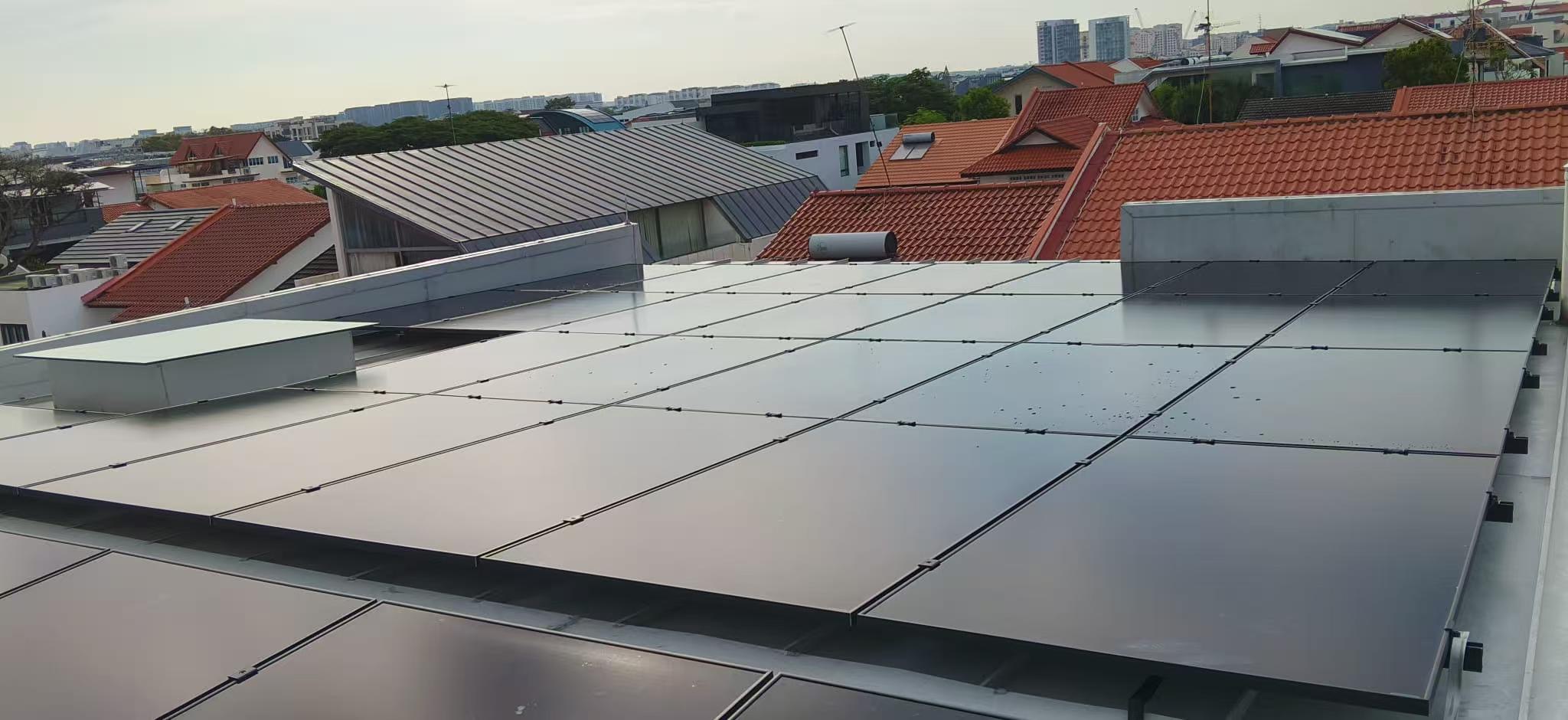
- Air gap and ventilation: panels mounted with a proper air gap beneath them run cooler than panels laid flat against the roof surface. Airflow underneath carries heat away. A good installer designs for this.
- Roof type: a metal roof that conducts and radiates heat behaves differently from a tiled or RC (reinforced concrete) roof. Mounting method and standoff height should suit the roof.
- Tilt and orientation: correct tilt not only maximises sun capture but also helps airflow and rain self-cleaning, both of which protect output.
- Cable and inverter siting: keeping inverters out of direct sun and ensuring proper ventilation protects the whole system's efficiency and lifespan.
Two systems using identical panels can perform measurably differently depending on how carefully they are designed and installed. This is where an experienced installer earns their value.
What to look for when choosing panels for Singapore
- Temperature coefficient first: for Singapore's heat, prioritise a coefficient closer to -0.26%/°C over a higher headline wattage with a poorer coefficient.
- Proven heat-tolerant technology: ABC (All Back Contact) and HJT (Heterojunction) cells generally perform better in heat than standard PERC.
- Tier-1 manufacturer with a real warranty: a 25 to 30 year performance warranty only matters if the manufacturer will still be around to honour it.
- Installer track record in tropical conditions: Singapore's climate is unforgiving; choose an installer with a long local track record, not just imported specifications.
The bottom line
In Singapore, the panel that generates the most electricity is not always the one with the highest wattage on the datasheet. It is the one that holds its output in real rooftop heat, installed by a team that designs for ventilation and local conditions. A lower temperature coefficient, quality heat-tolerant cells, and careful installation routinely outperform a cheaper, hotter-running system over the 25 year life of the array.
Rezeca has completed more than 1,300 residential solar installations in Singapore since 2009, and specifies panels and mounting designs chosen specifically for performance in local heat. For a system designed around your actual roof and conditions, we offer a free on-site assessment and a no-obligation quote.
Want panels that perform in Singapore's heat?
Rezeca designs each system around your roof type, orientation, and local conditions, using heat-tolerant Tier-1 panels. Free on-site assessment and 30-year ROI projection included.
WhatsApp: +65 9839 9044 | Web: rezeca.com
Considering solar for your Singapore home?
Rezeca offers a free on-site assessment, no-obligation quotes, and full 25-year ROI projections based on your actual property. Own your system outright or finance it through UOB U-Solar, backed by 17 years of experience and 1,300+ landed-home installations.
Estimate your savingsWhatsApp:+65 9839 9044 | Email:enquiry@rezeca.com
All your solar questions, answered
Everything Singapore landed homeowners need to know about solar panel installation, costs, approvals, and returns.
Get Your Custom
Solar Plan
Prefer to chat? Tap the WhatsApp icon below to reach our team instantly.

Copyright © 2026 Rezeca Renewables.