Do Solar Panels Work on Cloudy and Rainy Days in Singapore?
Yes, solar panels still generate on cloudy and rainy days in Singapore, just less. Here is how much output to expect in overcast weather, and why Singapore is still excellent for solar.
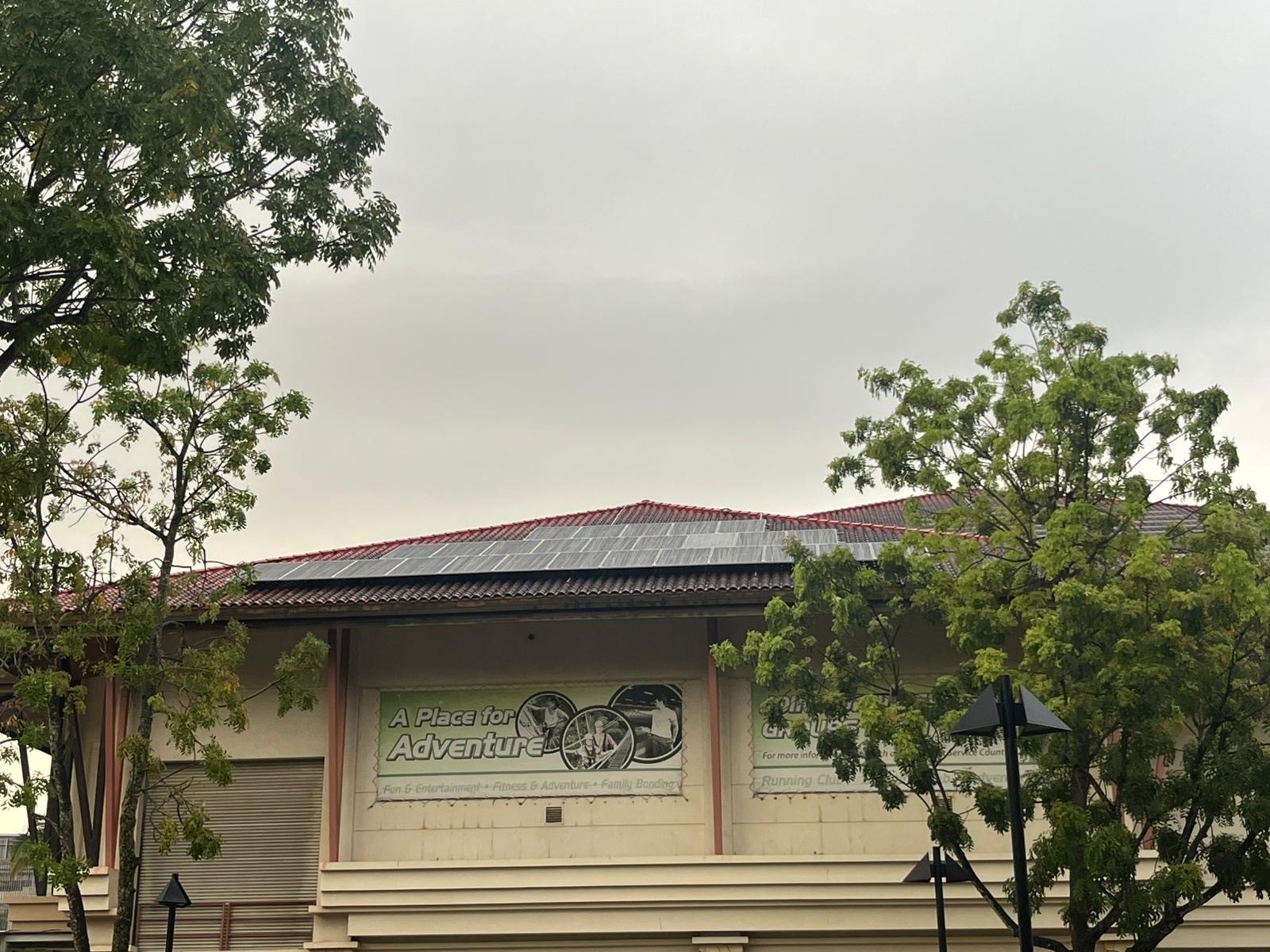
The quick answer: Yes. Solar panels generate electricity from diffuse (indirect) light, not only direct sunlight, so they keep working on cloudy and rainy days, just at reduced output, typically 20% to 50% of a clear-sky day when it is heavily overcast, and more on a bright but cloudy day. Rain briefly cuts output while it falls, but also rinses dust off your panels. Crucially, solar sizing in Singapore already assumes our real, cloudy, tropical weather: a well-designed system is rated on the roughly 1,100–1,350 kWh per kWp a year it actually produces here, wet season included. Singapore still receives more usable sunlight than cities like London or Frankfurt.
How can a panel work when there's no direct sun?
Solar panels convert light into electricity, and light reaches your roof in two forms: direct light straight from the sun, and diffuse light scattered across the sky by clouds and moisture. On a clear day you get mostly direct light. On an overcast Singapore afternoon you get mostly diffuse light, and panels still convert it, just less of it. That is why a solar system never drops to zero in daylight, even under thick cloud.
This matters a lot in a tropical climate like ours, where fully clear skies are the exception rather than the rule. Modern panels are designed to harvest diffuse light efficiently, which is one reason Singapore, despite its clouds and downpours, is a strong solar market.
How much output do you actually lose on a cloudy day?
It depends on how thick the cloud is. A light, hazy overcast might trim output by only 10% to 25%. A dark, heavily clouded sky before a storm can pull a panel down to 20% to 40% of its clear-sky output for that period. A sudden downpour drops it further while the rain is falling, then it climbs straight back as the sky brightens. Across a whole day, the losses are smaller than a single dark hour suggests, because Singapore days mix bright spells, haze, and cloud rather than staying uniformly dark.
Does the monsoon season change the picture?
Yes, but less dramatically than people expect. Singapore has two monsoon periods, roughly the Northeast Monsoon around November to January and the Southwest Monsoon around June to September, with wetter, cloudier stretches. During these months a system generates somewhat less than in the sunnier months, with typical month-to-month variation on the order of 15% to 20% around the average.
The key point is that this is already built into how a good installer sizes your system. The annual yield figure used for Singapore, around 1,100 to 1,350 kWh per installed kWp, is a whole-year average that already blends bright months and wet ones. Your payback and savings estimates are based on that real-world number, not on an unrealistic all-sunshine assumption. So a rainy fortnight is not a nasty surprise; it is part of the average you were already quoted.
Does rain damage panels, or actually help?
Rain is mostly a good thing. A downpour rinses off dust, pollen, and light debris, which helps keep panels producing near their best. It is not a complete substitute for occasional cleaning, though, because rain can also leave behind fine organic matter and, over time, streaks along panel edges. For most landed homes a professional clean roughly every 6 months keeps output where it should be. More on that in our solar maintenance guide.
What about lightning?
Singapore has one of the highest rates of lightning activity in the world, with thunderstorms on well over a hundred days a year. This is a real design consideration, not a reason to avoid solar. A properly installed system includes surge protection devices and correct earthing so that nearby strikes and grid surges are diverted safely rather than reaching your inverter or panels. This is standard on every Rezeca installation. If an installer doesn’t mention surge protection at all, ask.
So is Singapore actually good for solar?
Yes, and by more than the clouds suggest. Singapore receives an annual solar irradiation of roughly 1,580 kWh per square metre, comfortably higher than major European solar markets such as London (around 1,000) or Frankfurt (around 1,100). Our sun sits high overhead year-round, which suits rooftop panels well. The clouds and rain are simply part of the equation that is already priced into your generation estimate. Combined with high household electricity use in landed homes and rising tariffs, the tropical weather does not undermine the case for solar, it is the case for solar.
Frequently asked questions
Do solar panels work on cloudy days in Singapore?
Yes. Panels generate from diffuse light as well as direct sunlight, so they keep producing on cloudy days, typically at around 20% to 50% of clear-sky output when heavily overcast, and more when it is only lightly cloudy. Output never drops to zero during daylight.
Do solar panels work when it rains?
Yes, though output dips while rain is actively falling and low, dark clouds block most light. It recovers as soon as the sky brightens. Rain also helps by rinsing dust off the panels, which can improve performance afterwards.
How much does the monsoon season reduce solar output in Singapore?
Wetter months generate somewhat less, with typical month-to-month variation of about 15% to 20% around the yearly average. This is already built into the standard Singapore yield of roughly 1,100 to 1,350 kWh per kWp per year, so it is accounted for in your savings estimate.
Is Singapore's weather good enough for solar?
Yes. Singapore receives around 1,580 kWh per square metre of solar energy a year, more than cities like London or Frankfurt, and the sun stays high overhead year-round. Cloud and rain are already factored into local generation estimates.
Can lightning damage my solar panels in Singapore?
The risk is managed with proper design. Singapore has frequent lightning, so a correctly installed system includes surge protection and earthing to divert surges safely away from the inverter and panels. This is standard practice on a professional installation.
Want to know what your roof would generate here?
The honest way to answer that is to model your specific roof against Singapore’s real, cloud-and-all climate. We are happy to show you the year-round generation and savings you could expect for your home, no pressure, just the numbers.
Rezeca Renewables has installed solar for landed homes and businesses across Singapore since 2009, with over 1,500 installations and 45+ MWp to date, including 1,300+ residential landed homes.
Considering solar for your Singapore home?
Rezeca offers a free on-site assessment, no-obligation quotes, and full 25-year ROI projections based on your actual property. Own your system outright or finance it through UOB U-Solar, backed by 17 years of experience and 1,300+ landed-home installations.
Estimate your savingsWhatsApp:+65 9839 9044 | Email:enquiry@rezeca.com

Get Your Custom
Solar Plan
Prefer to chat? Tap the WhatsApp icon below to reach our team instantly.